


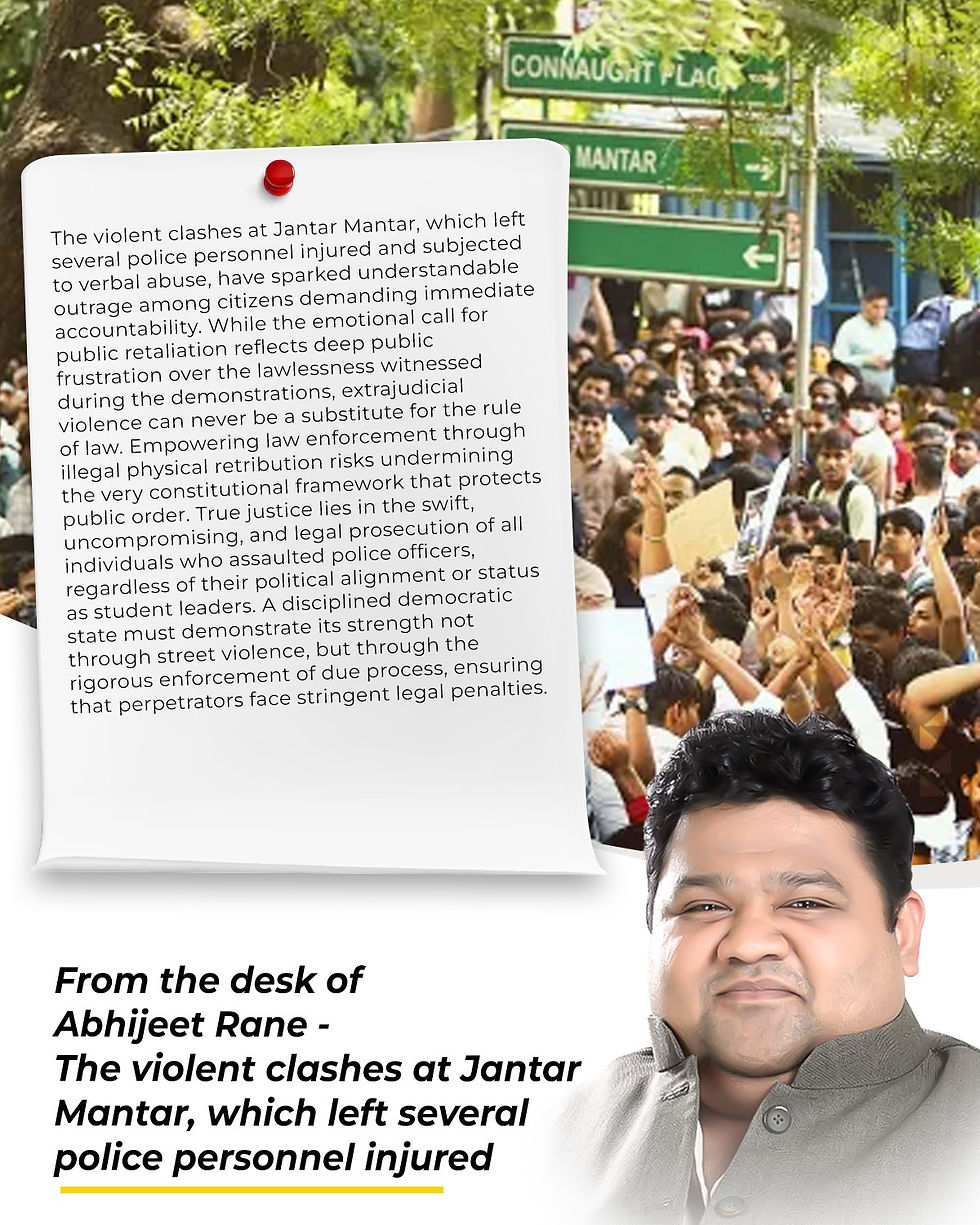
The violent clashes at Jantar Mantar, which left several police...
🖋️ *From The Desk of Abhijeet Rane*
The violent clashes at Jantar Mantar, which left several police personnel injured and subjected to verbal abuse, have sparked understandable outrage among citizens demanding immediate accountability. While the emotional call for public retaliation reflects deep public frustration over the lawlessness witnessed during the demonstrations, extrajudicial violence can never be a substitute for the rule of law. Empowering law enforcement through illegal physical retribution risks undermining the very constitutional framework that protects public order. True justice lies in the swift, uncompromising, and legal prosecution of all individuals who assaulted police officers, regardless of their political alignment or status as student leaders. A disciplined democratic state must demonstrate its strength not through street violence, but through the rigorous enforcement of due process, ensuring that perpetrators face stringent legal penalties.
🔽
🖋️ *From The Desk of Abhijeet Rane*
US President Donald Trump’s public assertions regarding a phased withdrawal of Israeli forces from Gaza, following an announced peace framework, highlight the stark gap between public diplomacy and complex geopolitical realities. While such announcements aim to project momentum toward a durable resolution, backroom negotiations face immense friction due to deeply entrenched security imperatives and strategic disagreements among key stakeholders. Unilateral declarations often overlook the delicate balance required on the ground, where military postures and regional power dynamics remain highly volatile. For any proposed disengagement plan to succeed, transparent coordination, genuine consensus, and enforceable security guarantees must supersede political rhetoric. Without addressing the core geopolitical realities driving the conflict, premature claims risk undermining diplomatic credibility and delaying true stabilization.
🔽
🖋️ *From The Desk of Abhijeet Rane*
According to a report by TV9 Marathi, a Pakistani politician delivered a stark warning inside the country's Parliament, predicting that Pakistan could soon fracture into three separate pieces. Highlighting severe internal turmoil and deepening political divisions, the leader cautioned that the situation might escalate to a point where citizens would require passports just to travel between different regions within the nation. The statement underscores the rising instability, economic crisis, and ethnic discontent plaguing the country. This dramatic acknowledgment from within the ruling establishment has sparked intense debates, reflecting growing anxieties over the nation's territorial integrity and future governance amid unfolding geopolitical and domestic challenges.
🔽
🖋️ *From The Desk of Abhijeet Rane*
The Central Government successfully passed both the Vande Mataram and Anti-Paper Leak Bills in the Lok Sabha and Rajya Sabha, marking a significant legislative triumph. Following this, Prime Minister Narendra Modi met President Droupadi Murmu at Rashtrapati Bhavan, presumably to request swift presidential assent for the immediate implementation of these new laws. With this swift action, the administration aims to curb unlawful activities and prevent politically motivated protests. Public sentiment regarding recent demonstrations at Jantar Mantar suggests a growing intolerance for disruptive agitators, as citizens appear unlikely to support future anti-government movements. Once these key measures are enforced, the government is expected to take decisive action against lawbreakers and restore discipline, ensuring that national security and law and order remain uncompromised across the country.
🔽
🖋️ *From The Desk of Abhijeet Rane*
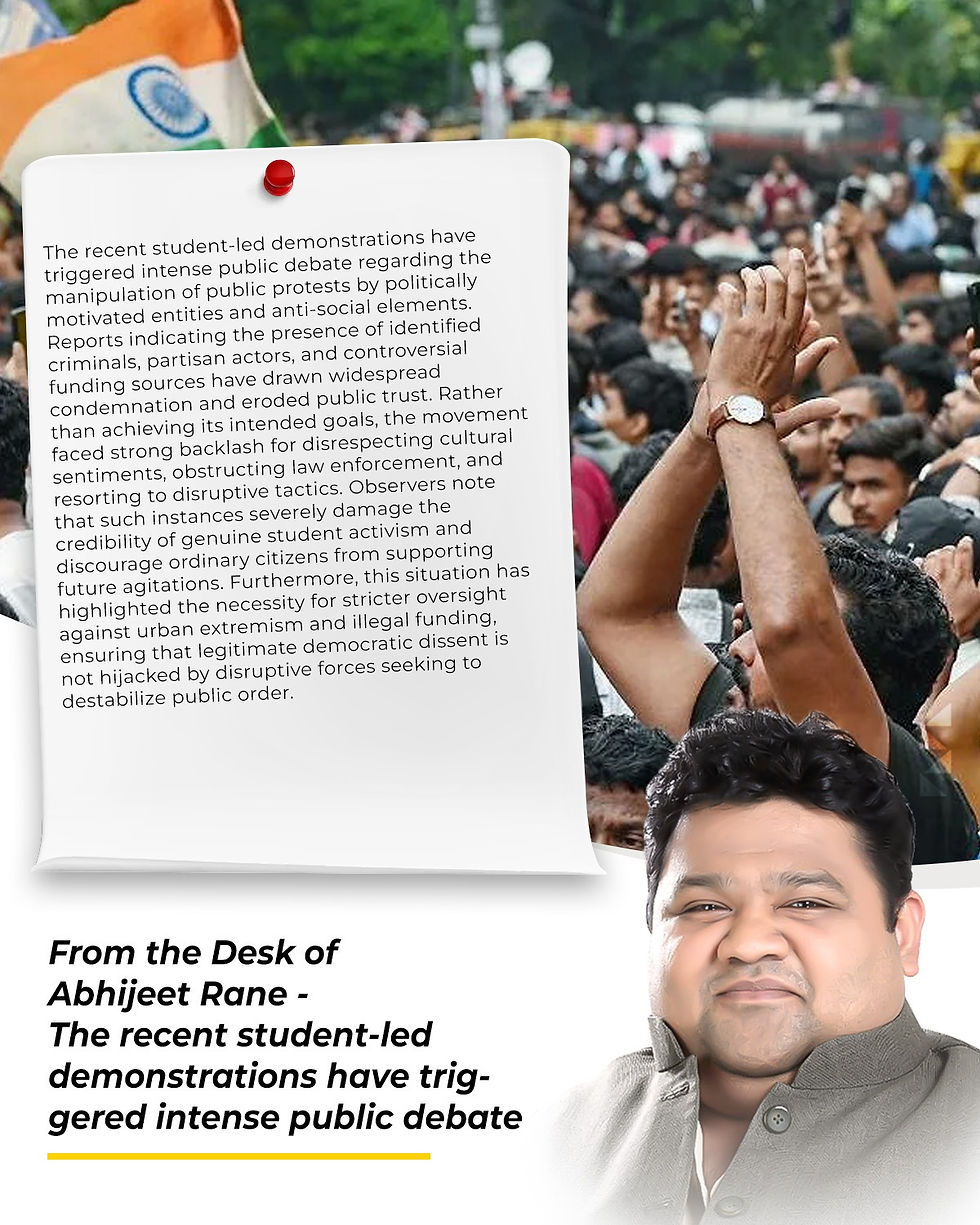
The recent student-led demonstrations have triggered intense public debate regarding the manipulation of public protests by politically motivated entities and anti-social elements. Reports indicating the presence of identified criminals, partisan actors, and controversial funding sources have drawn widespread condemnation and eroded public trust. Rather than achieving its intended goals, the movement faced strong backlash for disrespecting cultural sentiments, obstructing law enforcement, and resorting to disruptive tactics. Observers note that such instances severely damage the credibility of genuine student activism and discourage ordinary citizens from supporting future agitations. Furthermore, this situation has highlighted the necessity for stricter oversight against urban extremism and illegal funding, ensuring that legitimate democratic dissent is not hijacked by disruptive forces seeking to destabilize public order.
🔽
#NationalSecurity #Governance #Israel #Gaza #MiddleEast #Geopolitics #PeaceProcess #Diplomacy #Pakistan



Comments