


The Supreme Court's decision to examine false complaints...
🖋️ *From The Desk of Abhijeet Rane*
The Supreme Court's decision to examine false complaints under the SC/ST Prevention of Atrocities Act addresses a serious concern within India's legal system. Justice Surya Kant emphasized that while protective legislation remains vital for marginalized communities, the misuse of legal provisions—often leading to decades of wrongful imprisonment and ruined families—demands strict accountability. By issuing notices to state governments on a petition seeking penalties for perjured affidavits and fabricated cases, the top court aims to strike a necessary balance between social protection and justice. Establishing consequences for false accusations protects innocent citizens from malicious prosecution without diluting the core intent of social welfare laws. Ultimately, ensuring that legal remedies cannot be weaponized is essential to preserving public trust in the judicial system and upholding genuine equality before the law.
🔽
🖋️ *From The Desk of Abhijeet Rane*
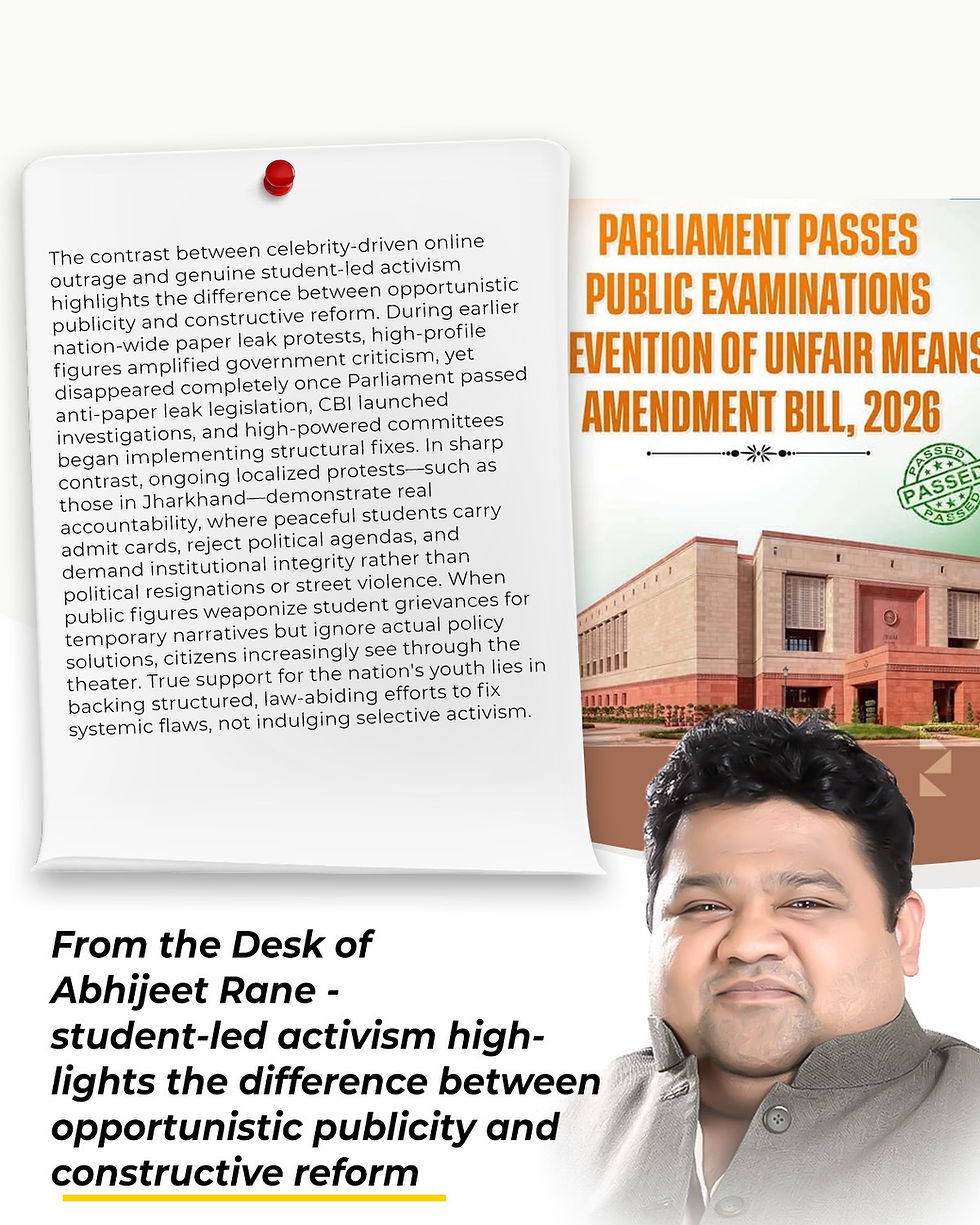
The contrast between celebrity-driven online outrage and genuine student-led activism highlights the difference between opportunistic publicity and constructive reform. During earlier nation-wide paper leak protests, high-profile figures amplified government criticism, yet disappeared completely once Parliament passed anti-paper leak legislation, CBI launched investigations, and high-powered committees began implementing structural fixes. In sharp contrast, ongoing localized protests—such as those in Jharkhand—demonstrate real accountability, where peaceful students carry admit cards, reject political agendas, and demand institutional integrity rather than political resignations or street violence. When public figures weaponize student grievances for temporary narratives but ignore actual policy solutions, citizens increasingly see through the theater. True support for the nation's youth lies in backing structured, law-abiding efforts to fix systemic flaws, not indulging selective activism.
🔽
🖋️ *From The Desk of Abhijeet Rane*
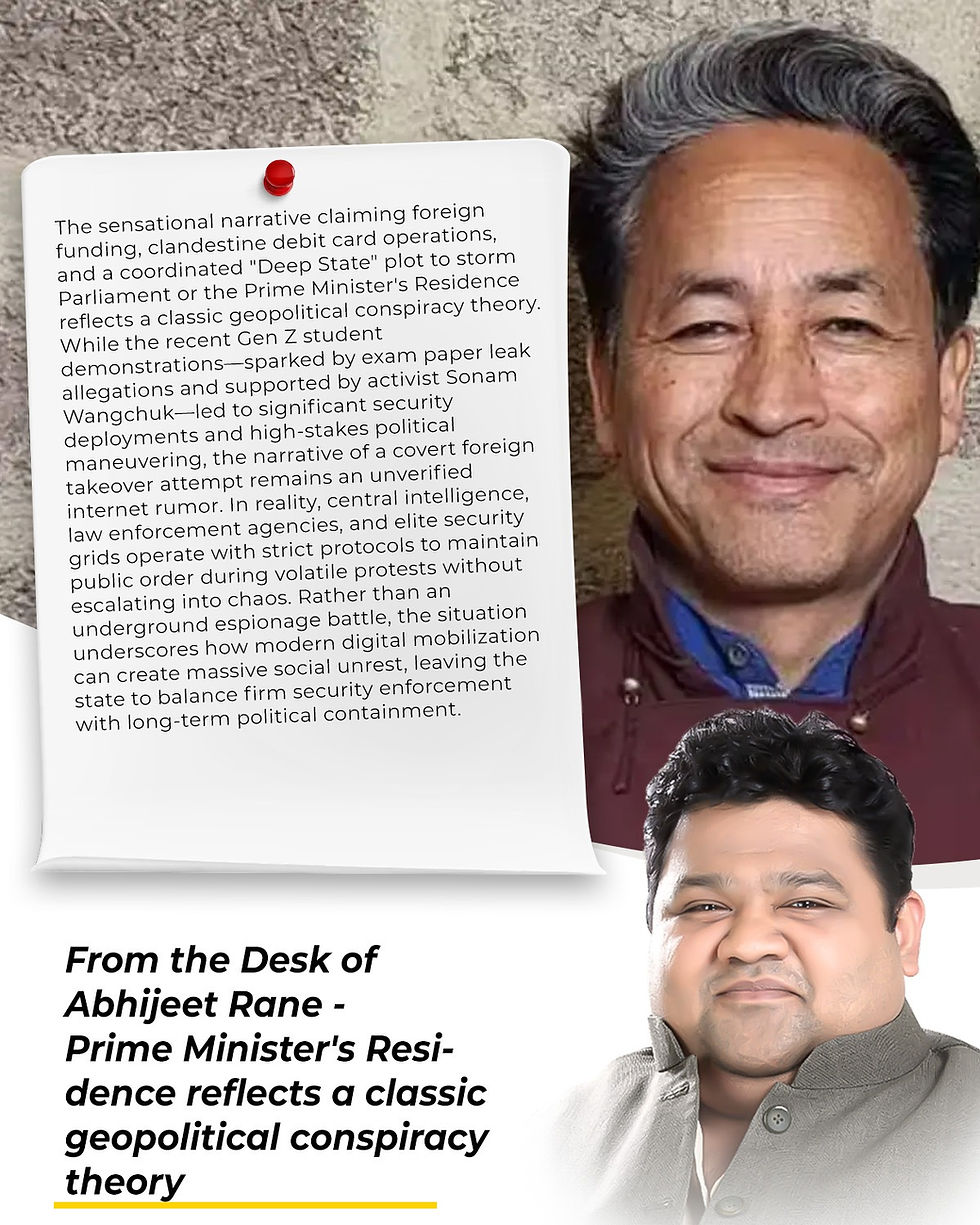
The sensational narrative claiming foreign funding, clandestine debit card operations, and a coordinated "Deep State" plot to storm Parliament or the Prime Minister's Residence reflects a classic geopolitical conspiracy theory. While the recent Gen Z student demonstrations—sparked by exam paper leak allegations and supported by activist Sonam Wangchuk—led to significant security deployments and high-stakes political maneuvering, the narrative of a covert foreign takeover attempt remains an unverified internet rumor. In reality, central intelligence, law enforcement agencies, and elite security grids operate with strict protocols to maintain public order during volatile protests without escalating into chaos. Rather than an underground espionage battle, the situation underscores how modern digital mobilization can create massive social unrest, leaving the state to balance firm security enforcement with long-term political containment.
🔽
🖋️ *From The Desk of Abhijeet Rane*
Political protests, police action, and online clashes often spark intense outrage, leaving families to deal with the real-world consequences long after the digital noise fades. While PM Modi's stance offered a public path forward, the aggressive pushback—ranging from viral doxxing and police FIRs to street confrontations—shows the brutal reality of modern ideological conflict. In the social media age, provocative rants might gain instant validation from an online echo chamber, but when law enforcement takes action or partisan groups retaliate, those commentators are left completely isolated. The harsh truth is that social media followers never show up in court or absorb physical fallout; the burden falls squarely on individuals and their families. Ultimately, public anger is temporary, but the legal, personal, and social costs of reckless outrage are permanent.
🔽
🖋️ *From The Desk of Abhijeet Rane*
The frustration of grassroots supporters defending a political leader online while official party machinery remains silent highlights a major flaw in modern political organization. Dedicated voters often step into the line of fire on social media out of personal conviction, taking on harsh backlash, legal threats, and personal attacks. Meanwhile, appointed office-bearers in specialized party wings frequently enjoy the privileges of their positions without actively stepping up during high-stakes narrative battles. This growing disconnects leaves uncompensated everyday loyalists carrying the heavy burden of public defense. When official party cells fail to organize timely, structured responses to political criticism, they risk alienating the very core base that voluntarily drives their digital momentum. Ultimately, relying on unpaid volunteers while political appointees stay passive is an unsustainable approach to modern public relations.
🔽
#LegalReform #PaperLeak #Education #ExamReforms #StudentProtests #FactCheck #FakeNews #Misinformation #SocialMedia #DigitalResponsibility #OnlineSpeech #PoliticalCommunication #Grassroots #PoliticalVolunteers #DigitalCampaign




Comments