


The murder of Shiv Sena (UBT) functionary Pradeep Purnekar...
🖋️ *From The Desk of Abhijeet Rane*
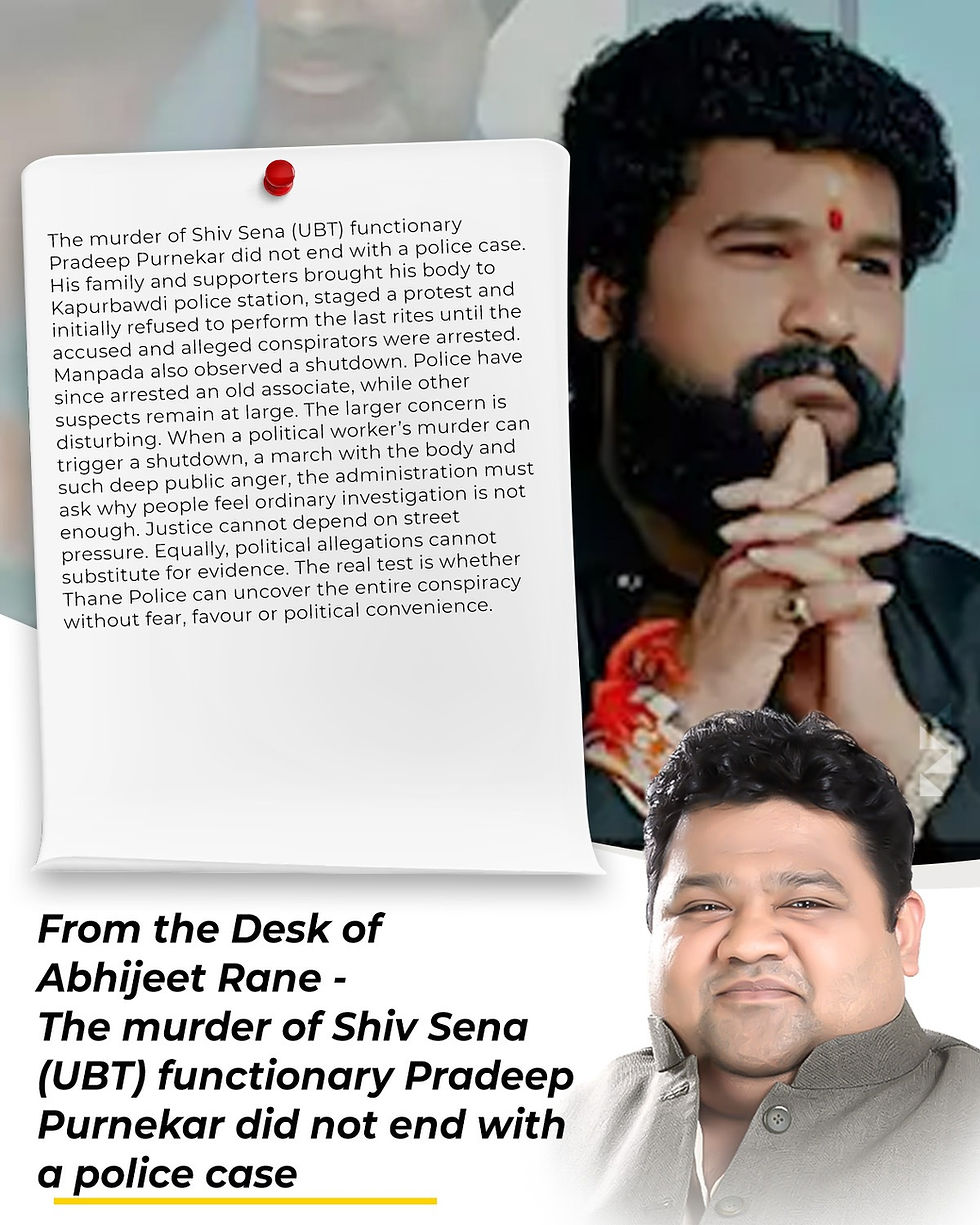
The murder of Shiv Sena (UBT) functionary Pradeep Purnekar did not end with a police case. His family and supporters brought his body to Kapurbawdi police station, staged a protest and initially refused to perform the last rites until the accused and alleged conspirators were arrested. Manpada also observed a shutdown. Police have since arrested an old associate, while other suspects remain at large. The larger concern is disturbing. When a political worker’s murder can trigger a shutdown, a march with the body and such deep public anger, the administration must ask why people feel ordinary investigation is not enough. Justice cannot depend on street pressure. Equally, political allegations cannot substitute for evidence. The real test is whether Thane Police can uncover the entire conspiracy without fear, favour or political convenience.
🔽
🖋️ *From The Desk of Abhijeet Rane*
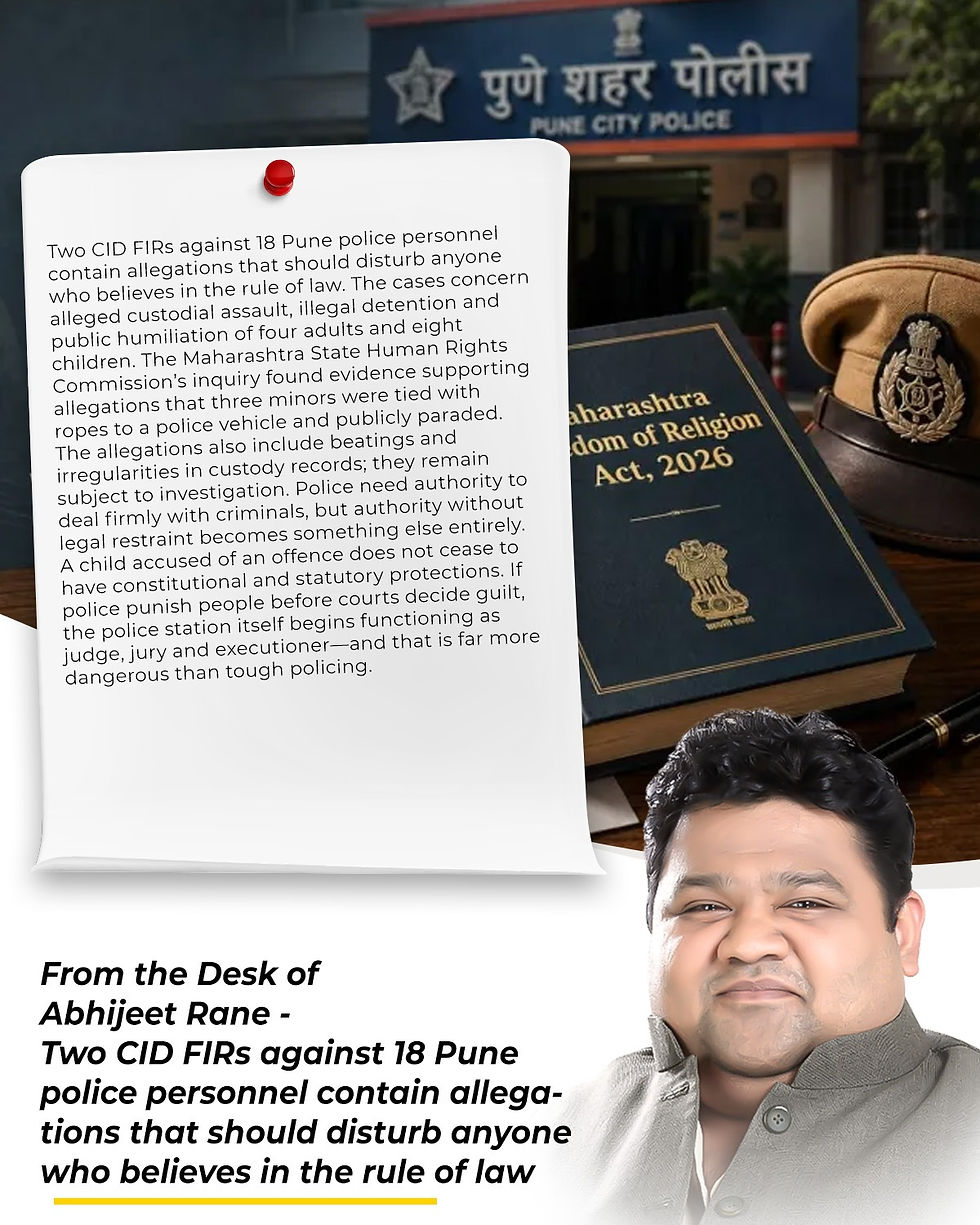
Two CID FIRs against 18 Pune police personnel contain allegations that should disturb anyone who believes in the rule of law. The cases concern alleged custodial assault, illegal detention and public humiliation of four adults and eight children. The Maharashtra State Human Rights Commission’s inquiry found evidence supporting allegations that three minors were tied with ropes to a police vehicle and publicly paraded. The allegations also include beatings and irregularities in custody records; they remain subject to investigation. Police need authority to deal firmly with criminals, but authority without legal restraint becomes something else entirely. A child accused of an offence does not cease to have constitutional and statutory protections. If police punish people before courts decide guilt, the police station itself begins functioning as judge, jury and executioner—and that is far more dangerous than tough policing.
🔽
🖋️ *From The Desk of Abhijeet Rane*
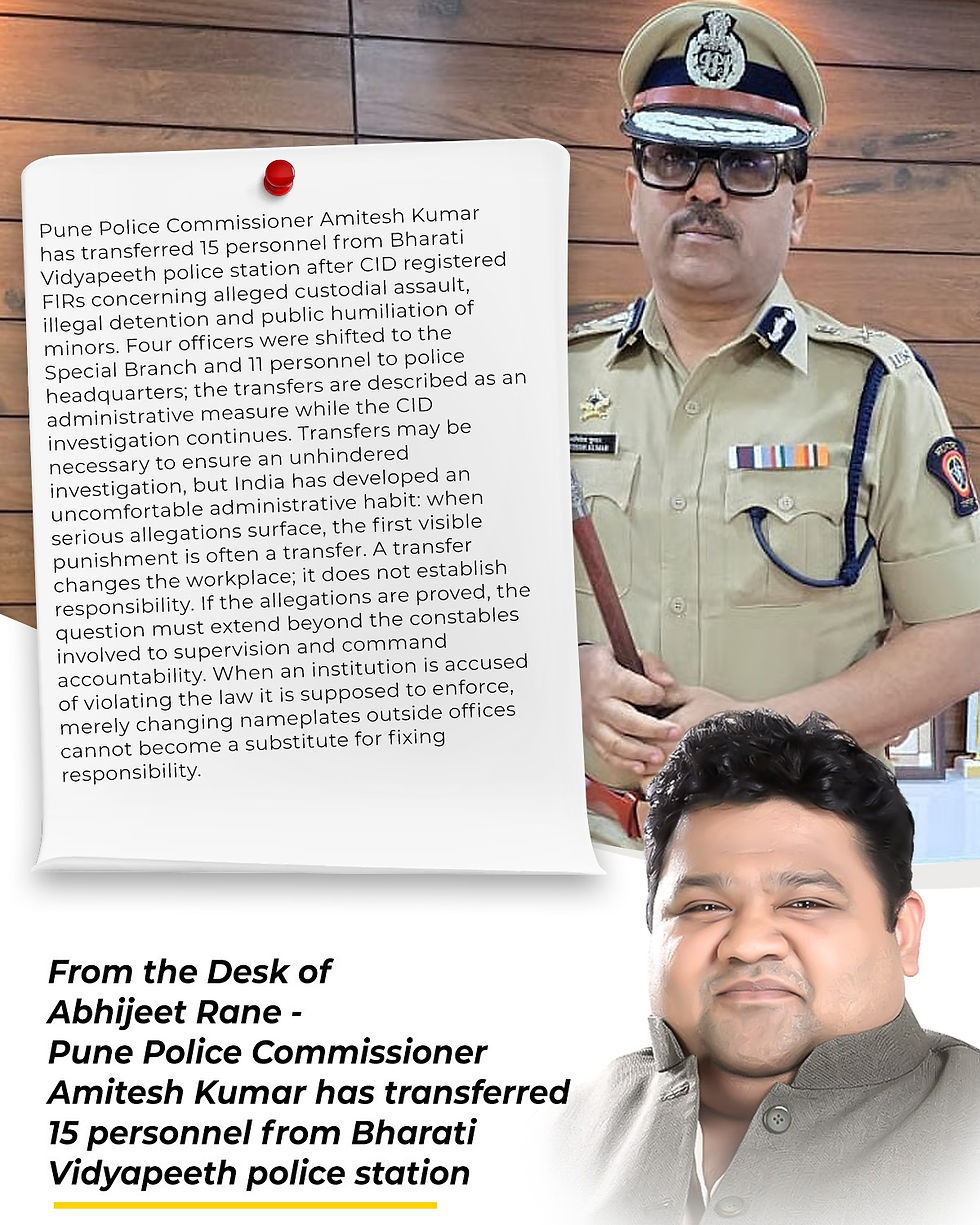
Pune Police Commissioner Amitesh Kumar has transferred 15 personnel from Bharati Vidyapeeth police station after CID registered FIRs concerning alleged custodial assault, illegal detention and public humiliation of minors. Four officers were shifted to the Special Branch and 11 personnel to police headquarters; the transfers are described as an administrative measure while the CID investigation continues. Transfers may be necessary to ensure an unhindered investigation, but India has developed an uncomfortable administrative habit: when serious allegations surface, the first visible punishment is often a transfer. A transfer changes the workplace; it does not establish responsibility. If the allegations are proved, the question must extend beyond the constables involved to supervision and command accountability. When an institution is accused of violating the law it is supposed to enforce, merely changing nameplates outside offices cannot become a substitute for fixing responsibility.
🔽
🖋️ *From The Desk of Abhijeet Rane*
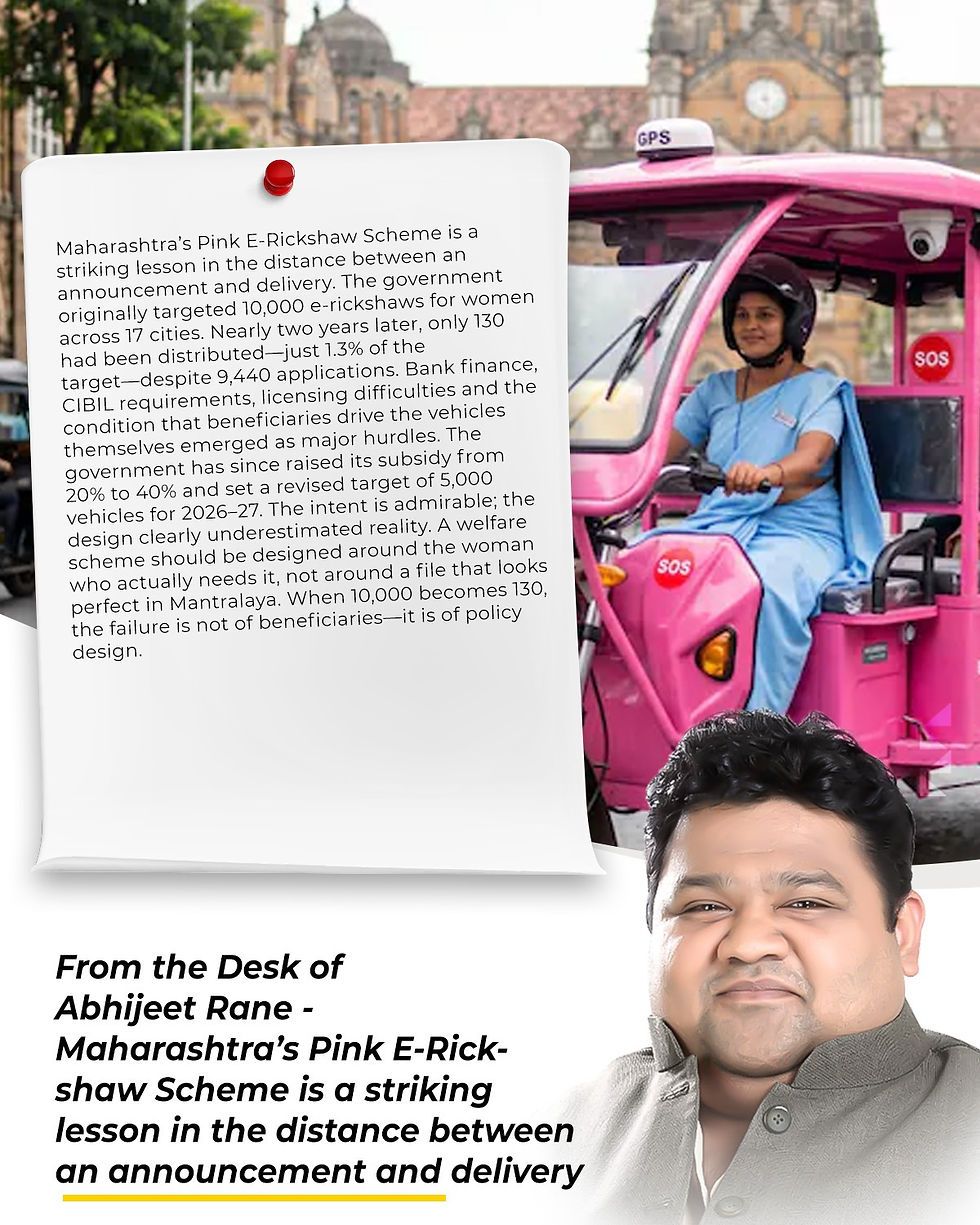
Maharashtra’s Pink E-Rickshaw Scheme is a striking lesson in the distance between an announcement and delivery. The government originally targeted 10,000 e-rickshaws for women across 17 cities. Nearly two years later, only 130 had been distributed—just 1.3% of the target—despite 9,440 applications. Bank finance, CIBIL requirements, licensing difficulties and the condition that beneficiaries drive the vehicles themselves emerged as major hurdles. The government has since raised its subsidy from 20% to 40% and set a revised target of 5,000 vehicles for 2026–27. The intent is admirable; the design clearly underestimated reality. A welfare scheme should be designed around the woman who actually needs it, not around a file that looks perfect in Mantralaya. When 10,000 becomes 130, the failure is not of beneficiaries—it is of policy design.
🔽
🖋️ *From The Desk of Abhijeet Rane*
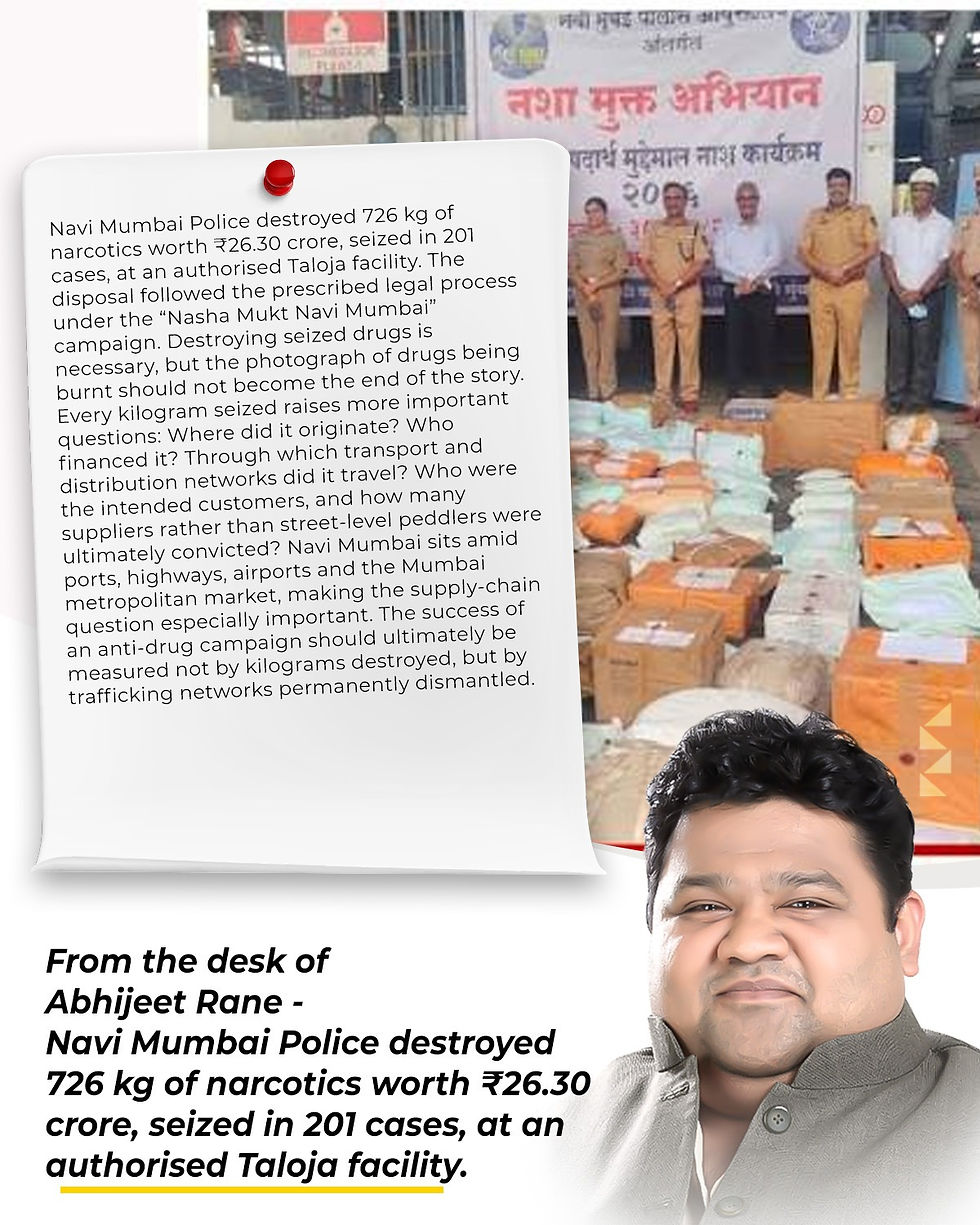
Navi Mumbai Police destroyed 726 kg of narcotics worth ₹26.30 crore, seized in 201 cases, at an authorised Taloja facility. The disposal followed the prescribed legal process under the “Nasha Mukt Navi Mumbai” campaign. Destroying seized drugs is necessary, but the photograph of drugs being burnt should not become the end of the story. Every kilogram seized raises more important questions: Where did it originate? Who financed it? Through which transport and distribution networks did it travel? Who were the intended customers, and how many suppliers rather than street-level peddlers were ultimately convicted? Navi Mumbai sits amid ports, highways, airports and the Mumbai metropolitan market, making the supply-chain question especially important. The success of an anti-drug campaign should ultimately be measured not by kilograms destroyed, but by trafficking networks permanently dismantled.
🔽
#AbhijeetRane #PradeepPurnekar #AmiteshKumar #Thane #PunePolice #NaviMumbaiPolice #Maharashtra #LawAndOrder #PoliceAccountability #CustodialViolence #HumanRights #PinkERickshaw #WomenEmpowerment #PolicyFailure #NashaMuktNaviMumbai #DrugFreeIndia #Narcotics #DrugTrafficking #PublicSafety #Justice #Accountability #MaharashtraNews #MumbaiMitra #PublicIssues

Comments