


Manoj Jarange Patil’s call for a fresh Maratha reservation...
🖋️ *From The Desk of Abhijeet Rane*
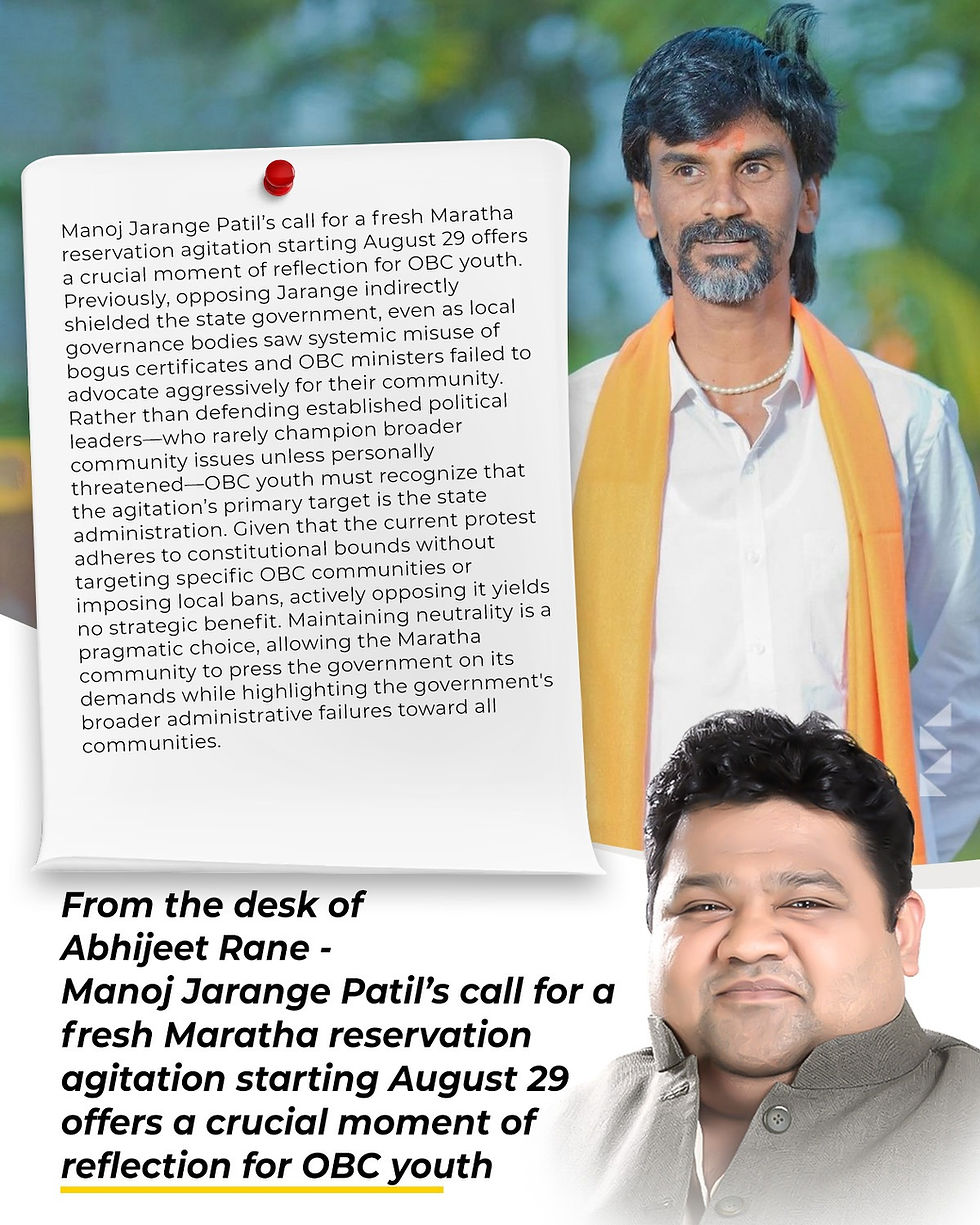
Manoj Jarange Patil’s call for a fresh Maratha reservation agitation starting August 29 offers a crucial moment of reflection for OBC youth. Previously, opposing Jarange indirectly shielded the state government, even as local governance bodies saw systemic misuse of bogus certificates and OBC ministers failed to advocate aggressively for their community. Rather than defending established political leaders—who rarely champion broader community issues unless personally threatened—OBC youth must recognize that the agitation’s primary target is the state administration. Given that the current protest adheres to constitutional bounds without targeting specific OBC communities or imposing local bans, actively opposing it yields no strategic benefit. Maintaining neutrality is a pragmatic choice, allowing the Maratha community to press the government on its demands while highlighting the government's broader administrative failures toward all communities.
🔽
🖋️ *From The Desk of Abhijeet Rane*
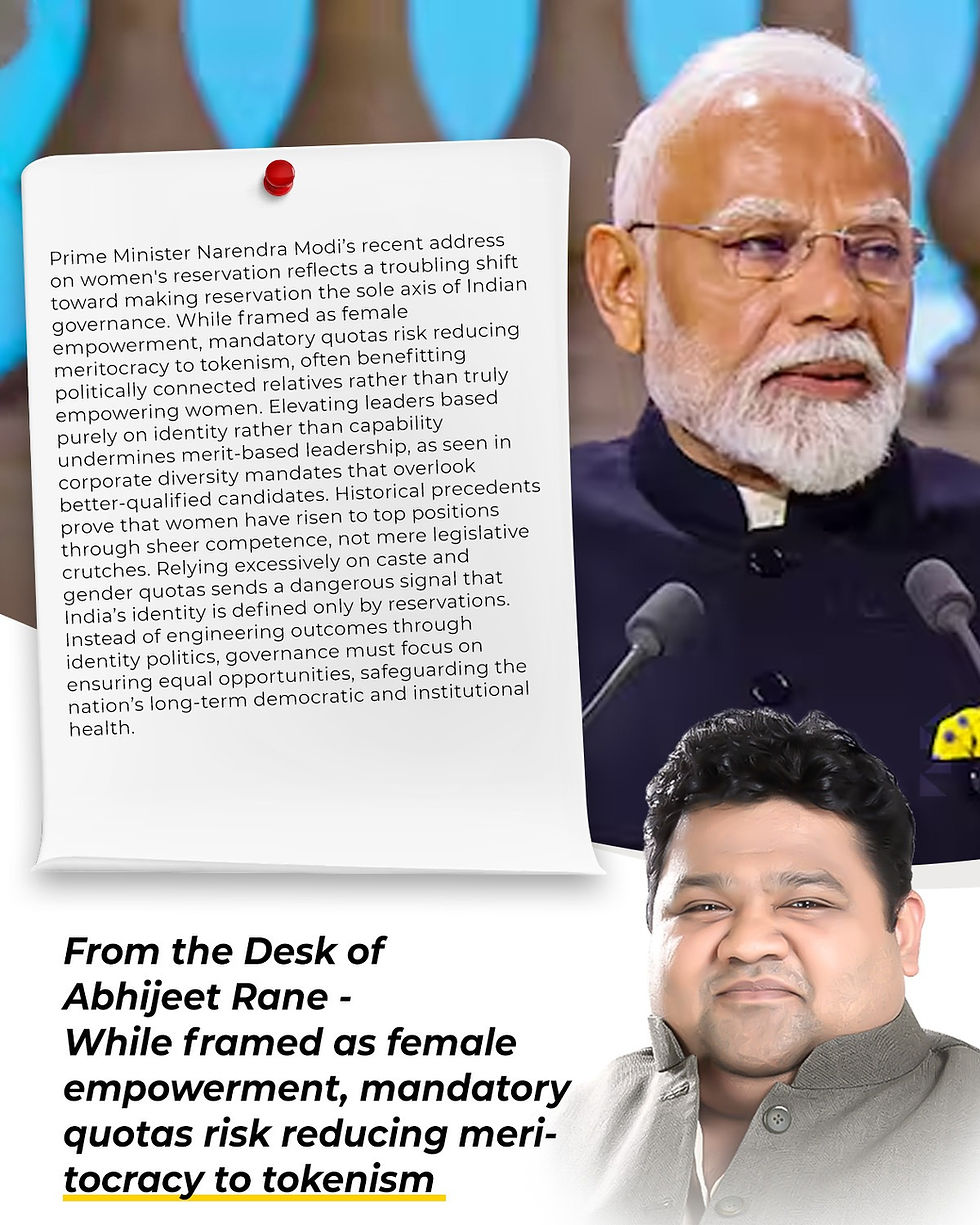
Prime Minister Narendra Modi’s recent address on women's reservation reflects a troubling shift toward making reservation the sole axis of Indian governance. While framed as female empowerment, mandatory quotas risk reducing meritocracy to tokenism, often benefitting politically connected relatives rather than truly empowering women. Elevating leaders based purely on identity rather than capability undermines merit-based leadership, as seen in corporate diversity mandates that overlook better-qualified candidates. Historical precedents prove that women have risen to top positions through sheer competence, not mere legislative crutches. Relying excessively on caste and gender quotas sends a dangerous signal that India’s identity is defined only by reservations. Instead of engineering outcomes through identity politics, governance must focus on ensuring equal opportunities, safeguarding the nation’s long-term democratic and institutional health.
🔽
🖋️ *From The Desk of Abhijeet Rane*
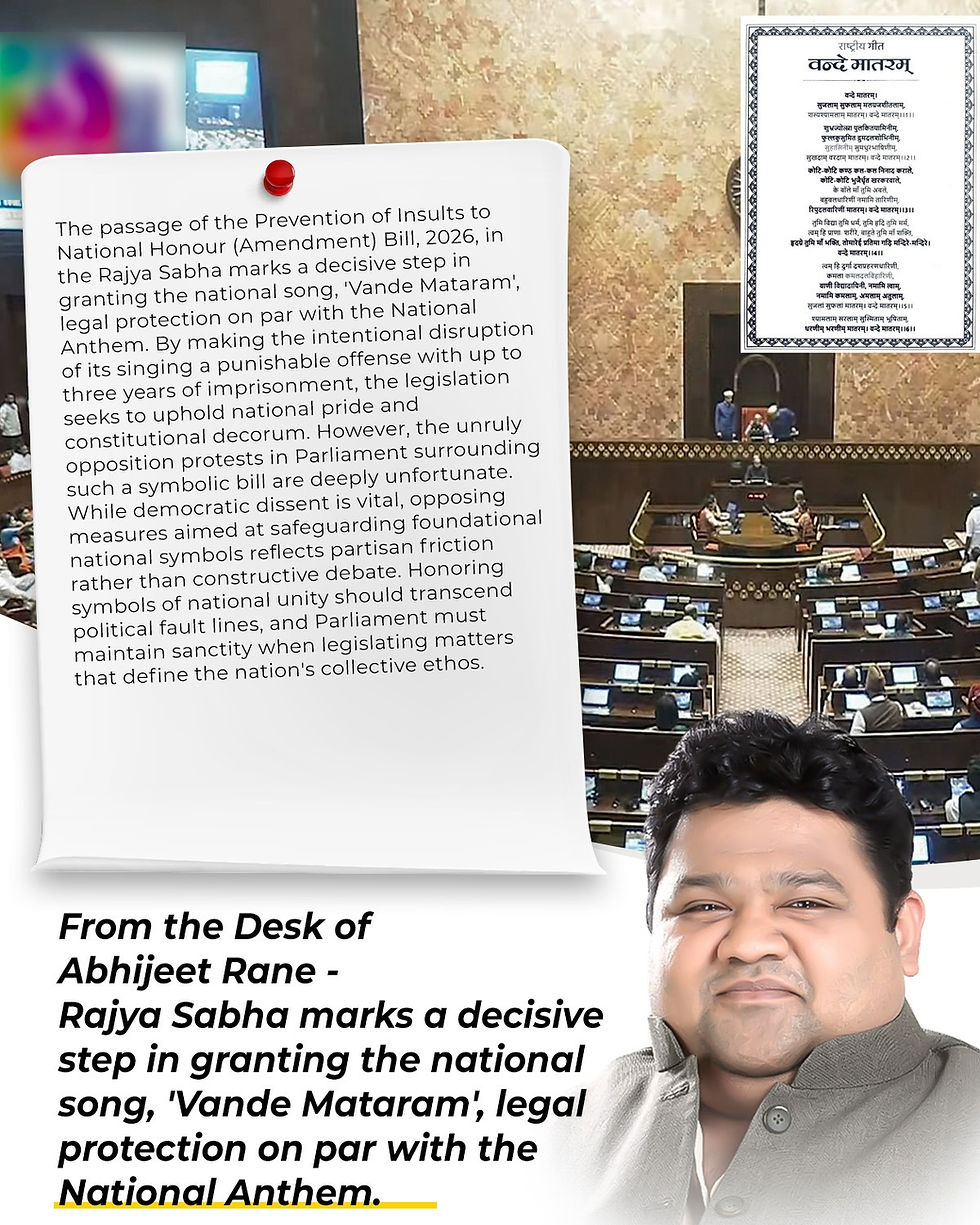
The passage of the Prevention of Insults to National Honour (Amendment) Bill, 2026, in the Rajya Sabha marks a decisive step in granting the national song, 'Vande Mataram', legal protection on par with the National Anthem. By making the intentional disruption of its singing a punishable offense with up to three years of imprisonment, the legislation seeks to uphold national pride and constitutional decorum. However, the unruly opposition protests in Parliament surrounding such a symbolic bill are deeply unfortunate. While democratic dissent is vital, opposing measures aimed at safeguarding foundational national symbols reflects partisan friction rather than constructive debate. Honoring symbols of national unity should transcend political fault lines, and Parliament must maintain sanctity when legislating matters that define the nation's collective ethos
🔽
🖋️ *From The Desk of Abhijeet Rane*
The unearthing of a massive 60.75-crore rupee scam at the revered Shri Sadguru Sant Balumama Devasthan Trust in Adamapur, Kolhapur, highlights a deeply concerning trend of institutional corruption within religious organizations. The systematic unauthorized sale of sacred sheep worth 41 crore rupees, combined with fraudulent land transactions and illegal contractor payouts, reflects a gross betrayal of public faith and administrative duty. The involvement of key figures, including the former charity inspector, trust administrators, and merchants, underscores systemic collusion. While the initiation of criminal cases and the ongoing investigation by the Economic Offences Wing signal accountability, this incident emphasizes the urgent need for stringent governance, financial transparency, and uncompromising oversight over public and religious trusts to protect community trust and institutional integrity.
🔽
🖋️ *From The Desk of Abhijeet Rane*
The lingering hypocrisy within public discourse becomes starkly evident when contrasting past crackdowns on political expression with the current defense of toxic rhetoric. When figures like Ketaki Chitale, Narayan Rane, and Anant Karmuse faced swift arrests, FIRs, and physical violence for derogatory remarks against Maharashtra’s political leaders, self-proclaimed neutral commentators remained conspicuously silent. Today, however, when vulgarity and anti-national rhetoric are targeted at the Prime Minister and the armed forces from platforms like Jantar Mantar, the same intellectual space rushes to justify it under the guise of youth expression and free speech. Political opportunism from parties is expected, but the selective outrage and convenient silence of independent observers expose a troubling double standard. Democracy demands uniform standards of decency; weaponizing freedom of speech to excuse vulgarity erodes the very credibility of public protest.
🔽



Comments