


The opposition's selective outrage over Electronic Voting Machines...
🖋️ *From The Desk of Abhijeet Rane*
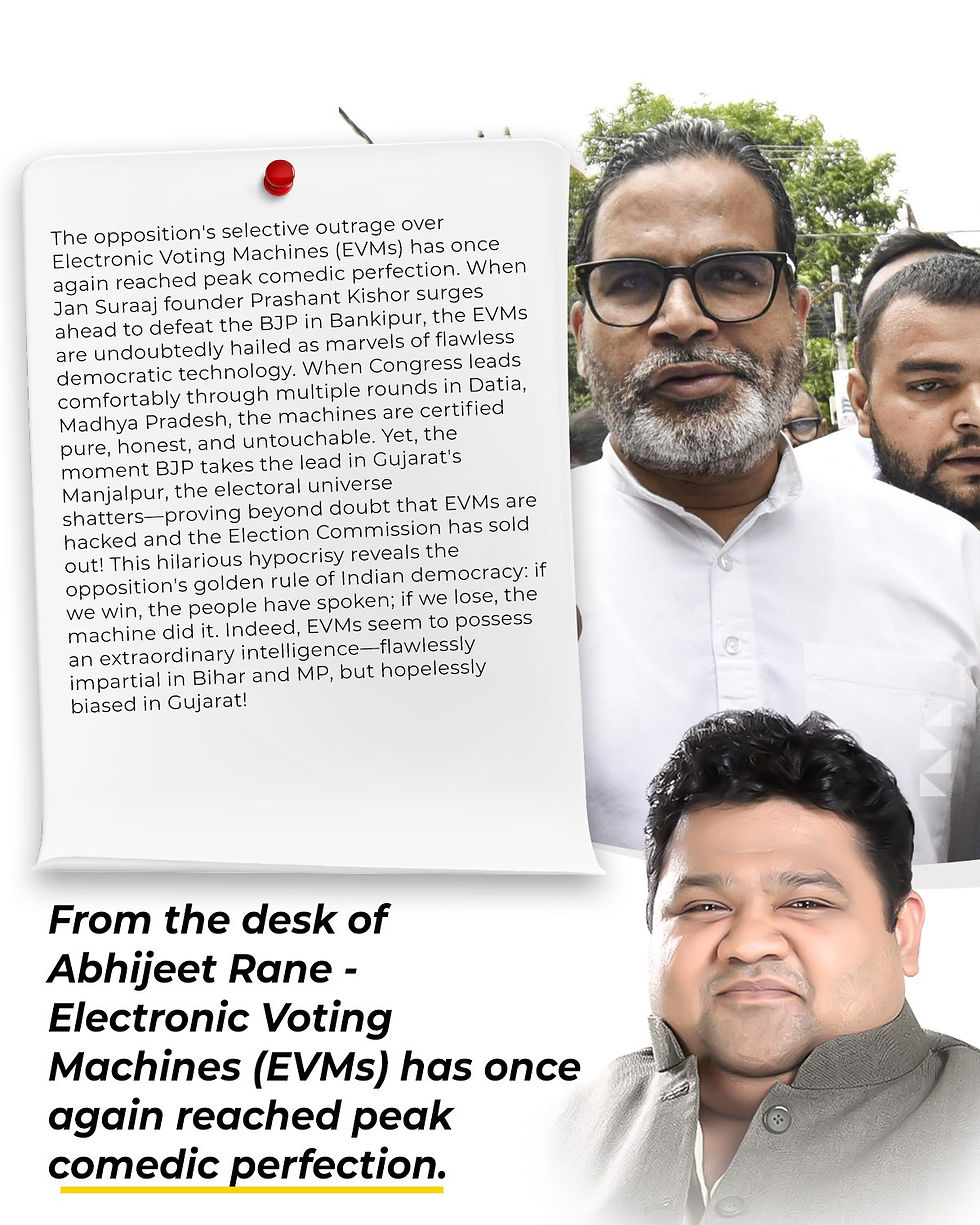
The opposition's selective outrage over Electronic Voting Machines (EVMs) has once again reached peak comedic perfection. When Jan Suraaj founder Prashant Kishor surges ahead to defeat the BJP in Bankipur, the EVMs are undoubtedly hailed as marvels of flawless democratic technology. When Congress leads comfortably through multiple rounds in Datia, Madhya Pradesh, the machines are certified pure, honest, and untouchable. Yet, the moment BJP takes the lead in Gujarat's Manjalpur, the electoral universe shatters—proving beyond doubt that EVMs are hacked and the Election Commission has sold out! This hilarious hypocrisy reveals the opposition's golden rule of Indian democracy: if we win, the people have spoken; if we lose, the machine did it. Indeed, EVMs seem to possess an extraordinary intelligence—flawlessly impartial in Bihar and MP, but hopelessly biased in Gujarat!
🔽
🖋️ *From The Desk of Abhijeet Rane*
Similar to Maharashtra's MPSC, the Jharkhand Public Service Commission (JPSC) civil service examination carries the hopes and hard work of lakhs of aspirants. However, the 14th JPSC recruitment process has been hit by a massive scam, where crucial examination tasks were outsourced to TDPL—a blacklisted agency—leading to severe irregularities in evaluation, missing cut-offs, and unauthorized result declarations. As desperate candidates stage protests in Ranchi demanding a CBI probe, the political hypocrites remain selectively deaf. The opposition, which disrupted Parliament demanding long debates on NEET and calling for minister resignations, has completely ignored the JPSC crisis. Opportunistic activist groups and self-serving agitators, who posed as student saviors during national exam leaks, are nowhere to be seen when a state-level recruitment scam wrecks thousands of lives. This blatant double standard exposes a partisan, opportunistic opposition that only exploits youth outrage for political leverage.
🔽
🖋️ *From The Desk of Abhijeet Rane*
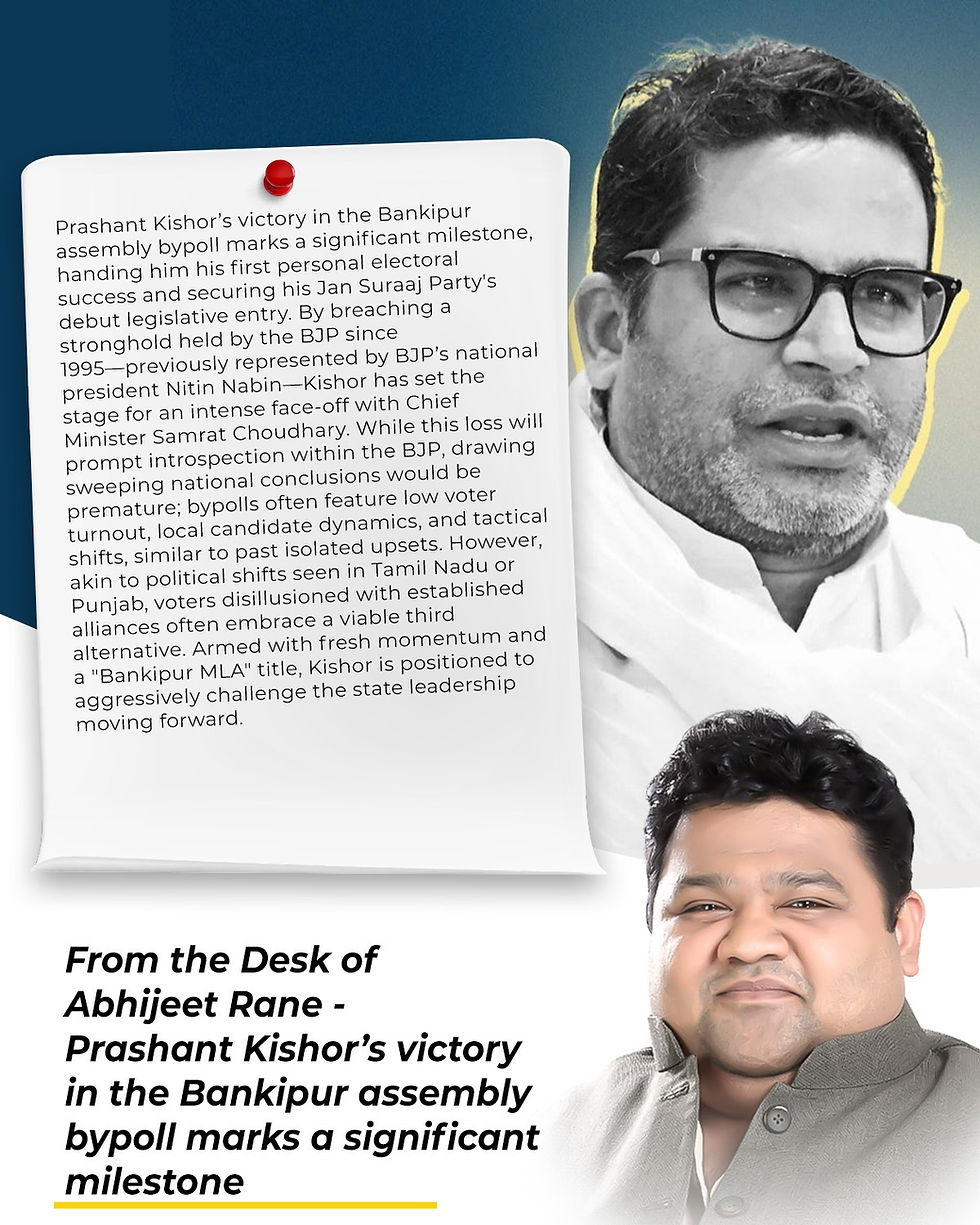
Prashant Kishor’s victory in the Bankipur assembly bypoll marks a significant milestone, handing him his first personal electoral success and securing his Jan Suraaj Party's debut legislative entry. By breaching a stronghold held by the BJP since 1995—previously represented by BJP’s national president Nitin Nabin—Kishor has set the stage for an intense face-off with Chief Minister Samrat Choudhary. While this loss will prompt introspection within the BJP, drawing sweeping national conclusions would be premature; bypolls often feature low voter turnout, local candidate dynamics, and tactical shifts, similar to past isolated upsets. However, akin to political shifts seen in Tamil Nadu or Punjab, voters disillusioned with established alliances often embrace a viable third alternative. Armed with fresh momentum and a "Bankipur MLA" title, Kishor is positioned to aggressively challenge the state leadership moving forward.
🔽
🖋️ *From The Desk of Abhijeet Rane*
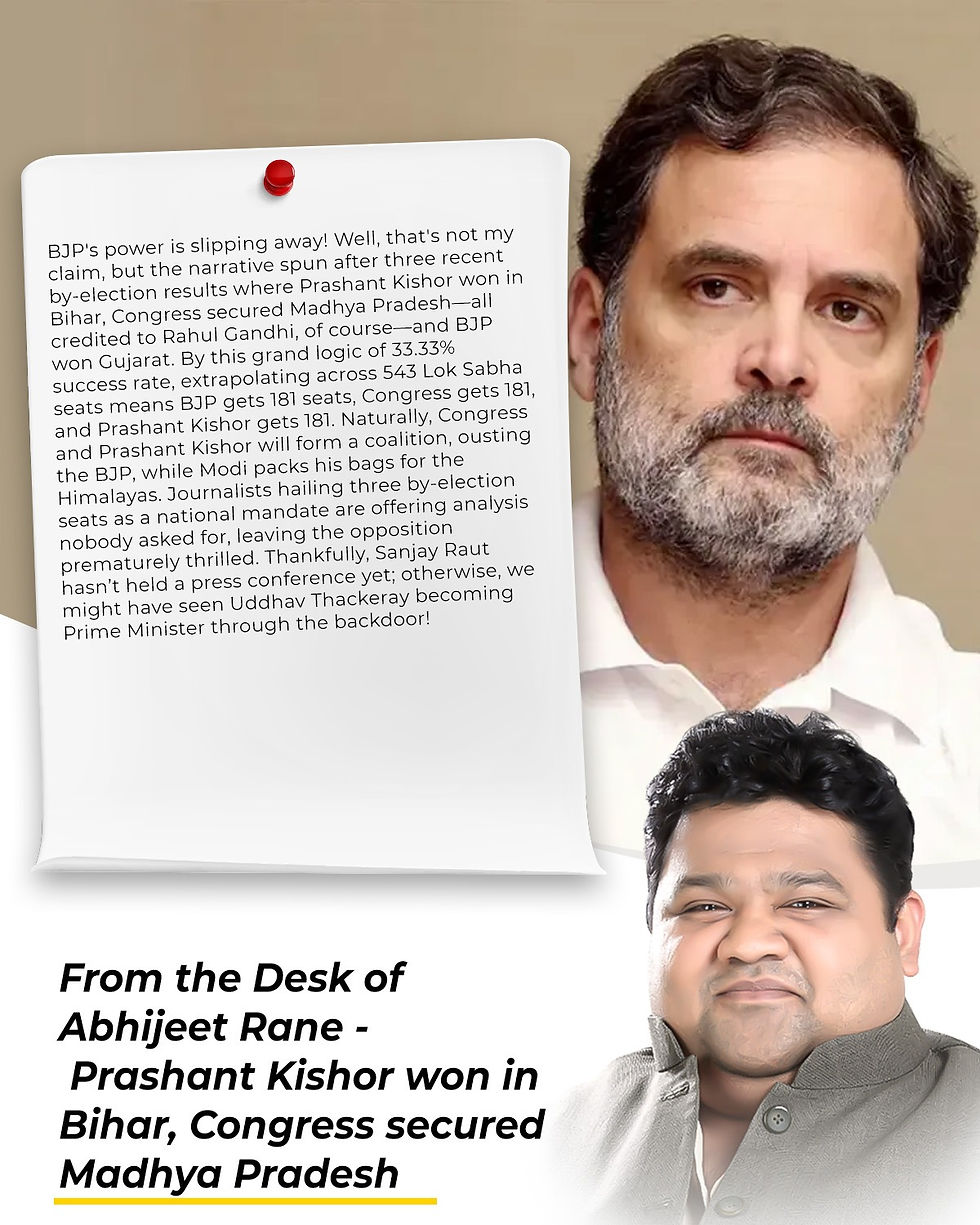
BJP's power is slipping away! Well, that's not my claim, but the narrative spun after three recent by-election results where Prashant Kishor won in Bihar, Congress secured Madhya Pradesh—all credited to Rahul Gandhi, of course—and BJP won Gujarat. By this grand logic of 33.33% success rate, extrapolating across 543 Lok Sabha seats means BJP gets 181 seats, Congress gets 181, and Prashant Kishor gets 181. Naturally, Congress and Prashant Kishor will form a coalition, ousting the BJP, while Modi packs his bags for the Himalayas. Journalists hailing three by-election seats as a national mandate are offering analysis nobody asked for, leaving the opposition prematurely thrilled. Thankfully, Sanjay Raut hasn’t held a press conference yet; otherwise, we might have seen Uddhav Thackeray becoming Prime Minister through the backdoor!
🔽
🖋️ *From The Desk of Abhijeet Rane*
Former Supreme Court Justice Abhay Oka’s recent remarks at a civic meet in Thane rightly challenge the prevailing political obsession with grand infrastructure as a substitute for true urban progress. Constructing mega-projects outside statutory Development Plans without taking citizens into confidence undermines environmental sustainability, local governance, and constitutional mandates. Real growth cannot be measured merely by concrete flyovers or highways; it is defined by a safe, dignified, and inclusive living environment for all residents, especially children, senior citizens, and persons with disabilities. As nuclear scientist Dr. Anil Kakodkar noted, urban planning must prioritize actual public needs over arbitrary project choices. Municipal authorities must align urban development with statutory public consultation, environmental preservation, and social welfare to ensure cities belong to their people, not just elected representatives.
🔽


Comments