


Some liberals are claiming that only Pakistan and the Sangh Parivar ...
🖋️ *From The Desk of Abhijeet Rane*
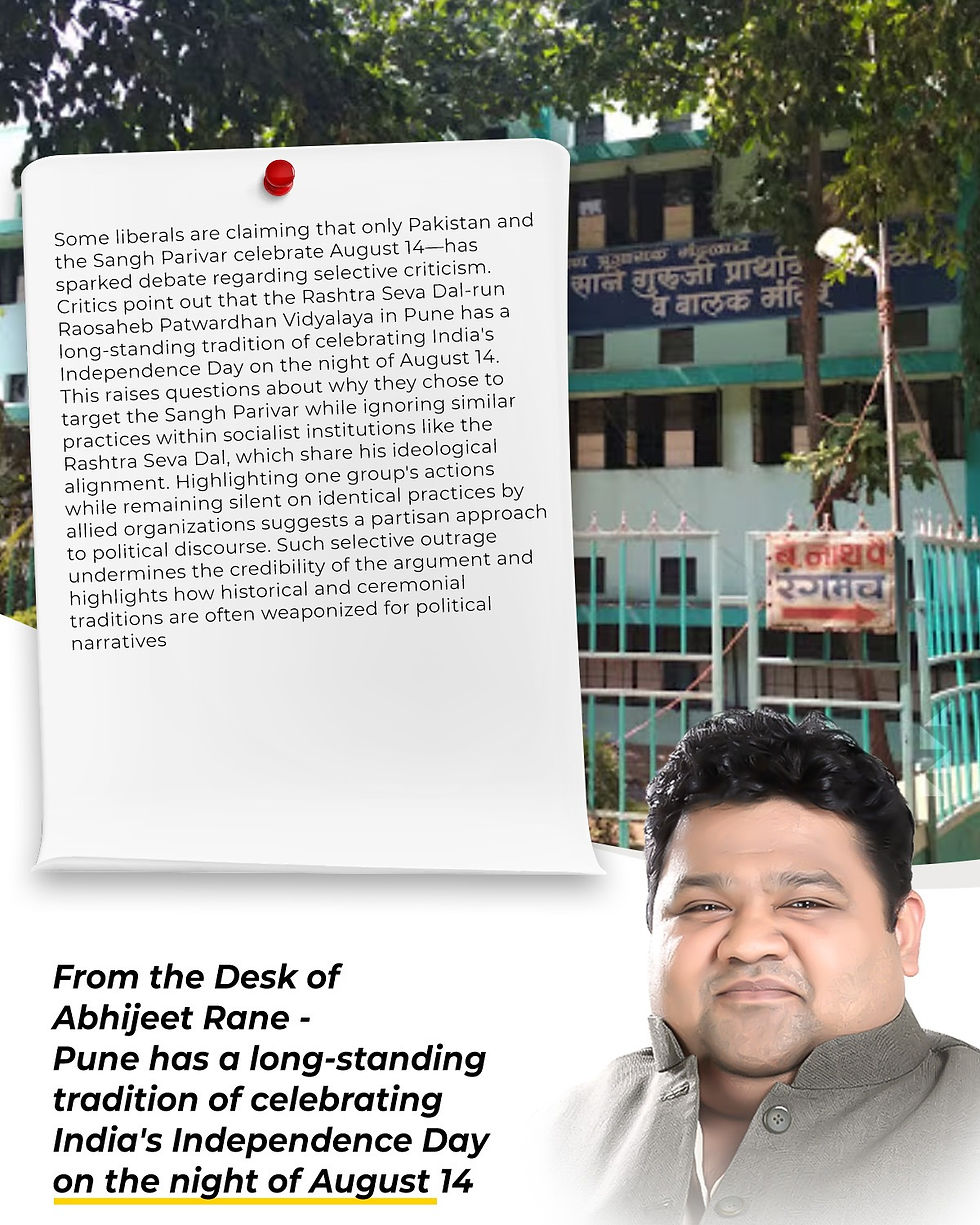
Some liberals are claiming that only Pakistan and the Sangh Parivar celebrate August 14—has sparked debate regarding selective criticism. Critics point out that the Rashtra Seva Dal-run Raosaheb Patwardhan Vidyalaya in Pune has a long-standing tradition of celebrating India's Independence Day on the night of August 14. This raises questions about why they chose to target the Sangh Parivar while ignoring similar practices within socialist institutions like the Rashtra Seva Dal, which share his ideological alignment. Highlighting one group's actions while remaining silent on identical practices by allied organizations suggests a partisan approach to political discourse. Such selective outrage undermines the credibility of the argument and highlights how historical and ceremonial traditions are often weaponized for political narratives.
🔽
🖋️ *From The Desk of Abhijeet Rane*
The recent incident at NALSAR University of Law, where students refused to accept their degrees from Chief Justice Surya Kant, triggered a controversial decision by Bar Council of India (BCI) Chairman Manan Mishra to deny their enrollment. However, the BCI was forced to revoke this order within hours following a public pushback by Abhijit Dipke and the CJP team. This event highlights the crucial role of institutional accountability in preserving democracy. Over the past decade, concerns have frequently been raised regarding the misuse of institutional power by political leadership. The swift reversal demonstrates that growing civic oversight and moral pressure can effectively challenge arbitrary decisions, even within established legal bodies. Ultimately, maintaining a vigilant citizenry remains essential to upholding democratic values and checking unchecked authority.
🔽
🖋️ *From The Desk of Abhijeet Rane*
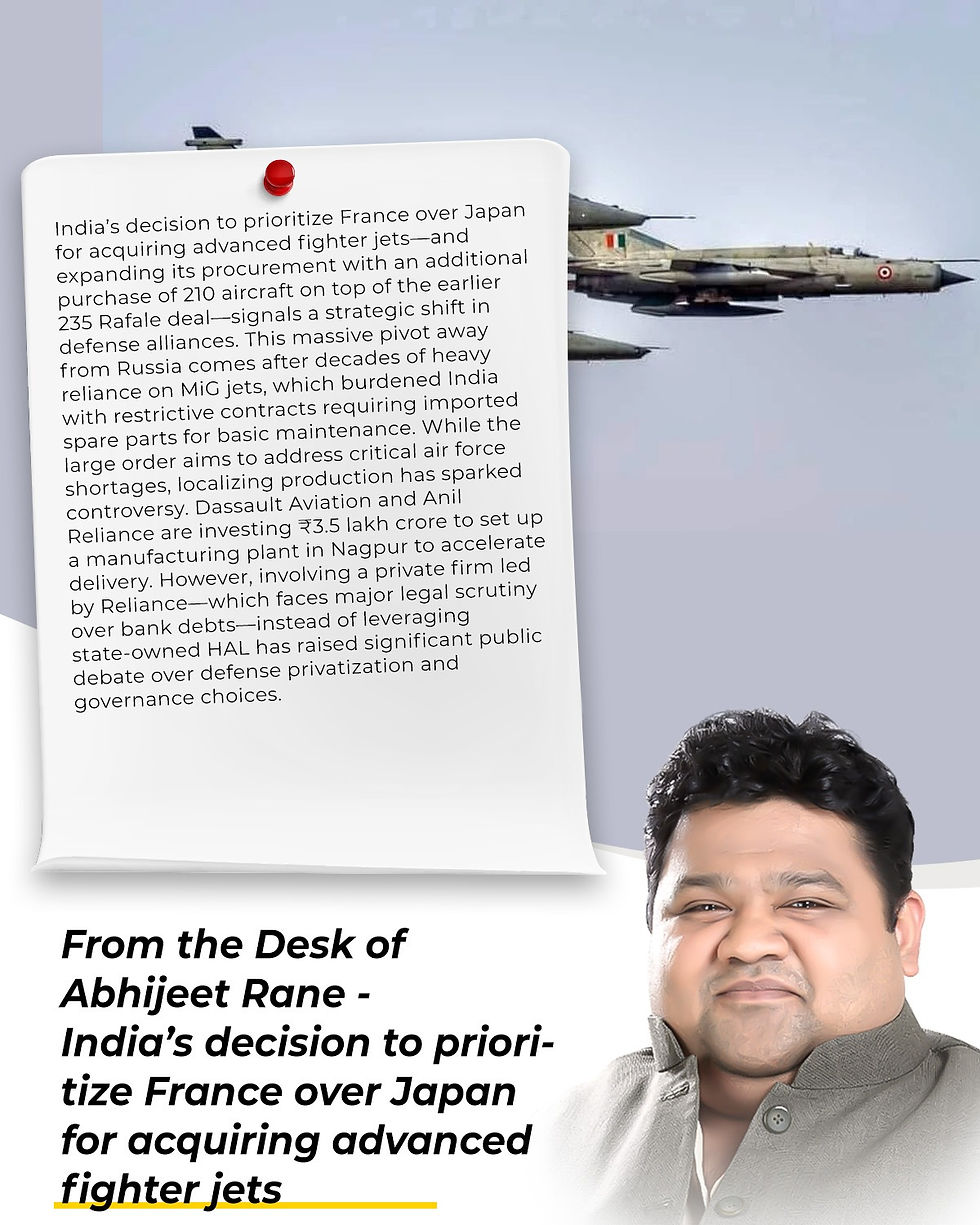
India’s decision to prioritize France over Japan for acquiring advanced fighter jets—and expanding its procurement with an additional purchase of 210 aircraft on top of the earlier 235 Rafale deal—signals a strategic shift in defense alliances. This massive pivot away from Russia comes after decades of heavy reliance on MiG jets, which burdened India with restrictive contracts requiring imported spare parts for basic maintenance. While the large order aims to address critical air force shortages, localizing production has sparked controversy. Dassault Aviation and Anil Reliance are investing ₹3.5 lakh crore to set up a manufacturing plant in Nagpur to accelerate delivery. However, involving a private firm led by Reliance—which faces major legal scrutiny over bank debts—instead of leveraging state-owned HAL has raised significant public debate over defense privatization and governance choices.
🔽
🖋️ *From The Desk of Abhijeet Rane*
The text reflects growing disillusionment among traditional supporters who feel sidelined by current political strategies. Key grievances stem from policies like SC/ST Act amendments, targeted welfare allocations, and perceived neglect of general and OBC concerns—including EWS benefits. This dissatisfaction mirrors broader debates around governance and voter loyalty. Critics argue that relying heavily on vote-bank dynamics while taking core supporters for granted risks alienating foundational voters. When governments respond primarily to high-pressure protests rather than quiet grievances, it leads to frustration over fiscal policies, tax burdens, and institutional fairness. Ultimately, the passage highlights a shift from staunch political alignment toward neutrality, underscoring that long-term political trust requires addressing the policy concerns and systemic fairness expected by all voter demographics.
🔽
🖋️ *From The Desk of Abhijeet Rane*
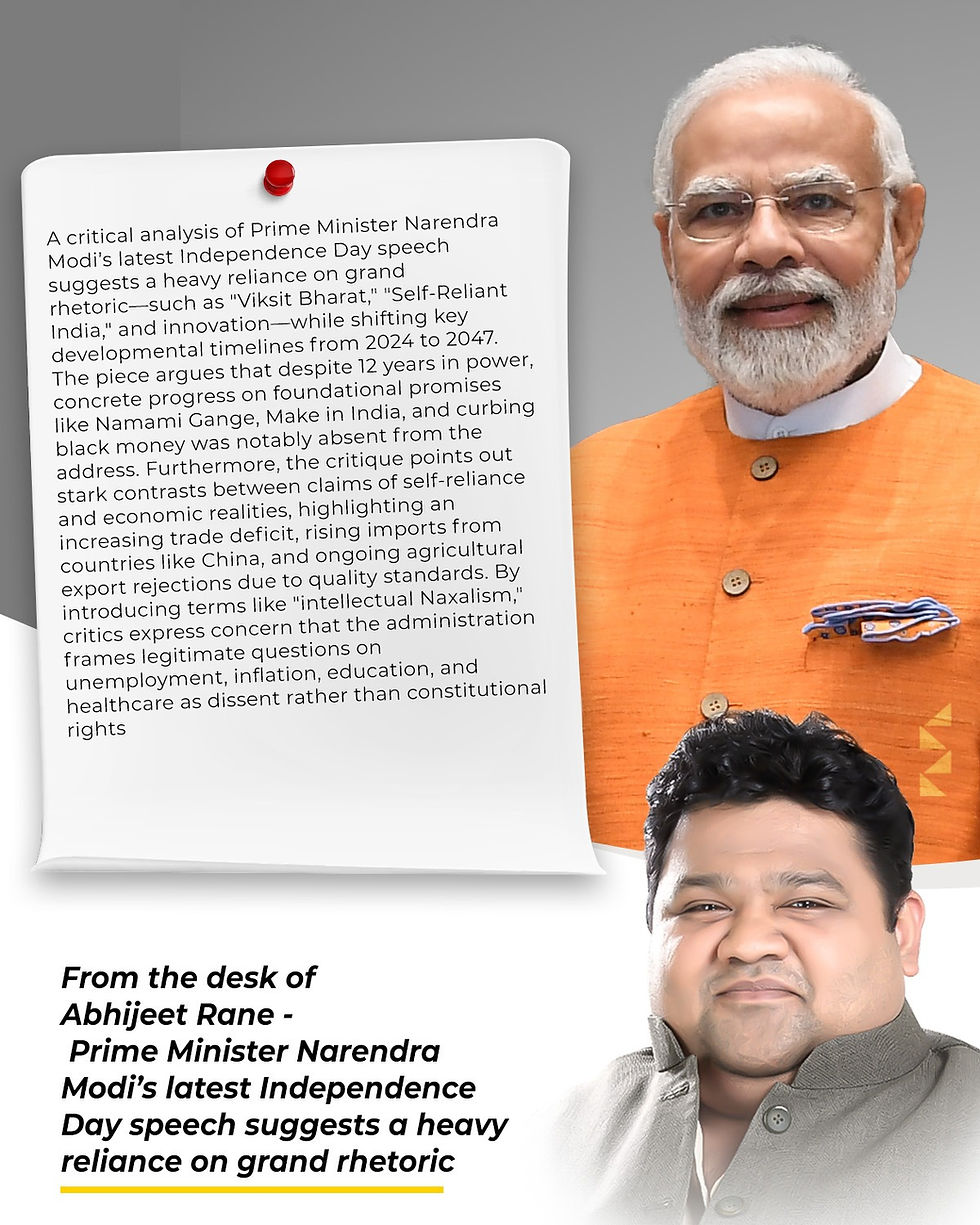
A critical analysis of Prime Minister Narendra Modi’s latest Independence Day speech suggests a heavy reliance on grand rhetoric—such as "Viksit Bharat," "Self-Reliant India," and innovation—while shifting key developmental timelines from 2024 to 2047. The piece argues that despite 12 years in power, concrete progress on foundational promises like Namami Gange, Make in India, and curbing black money was notably absent from the address. Furthermore, the critique points out stark contrasts between claims of self-reliance and economic realities, highlighting an increasing trade deficit, rising imports from countries like China, and ongoing agricultural export rejections due to quality standards. By introducing terms like "intellectual Naxalism," critics express concern that the administration frames legitimate questions on unemployment, inflation, education, and healthcare as dissent rather than constitutional rights.
🔽
#SelectiveOutrage #PoliticalBias #India #Democracy #Governance #NationalSecurity #Development #Accountability #BJP #NarendraModi #AbhijeetRane #MumbaiMitra



Comments