


Two young men dying after allegedly inhaling toxic fumes...
🖋️ *From The Desk of Abhijeet Rane*
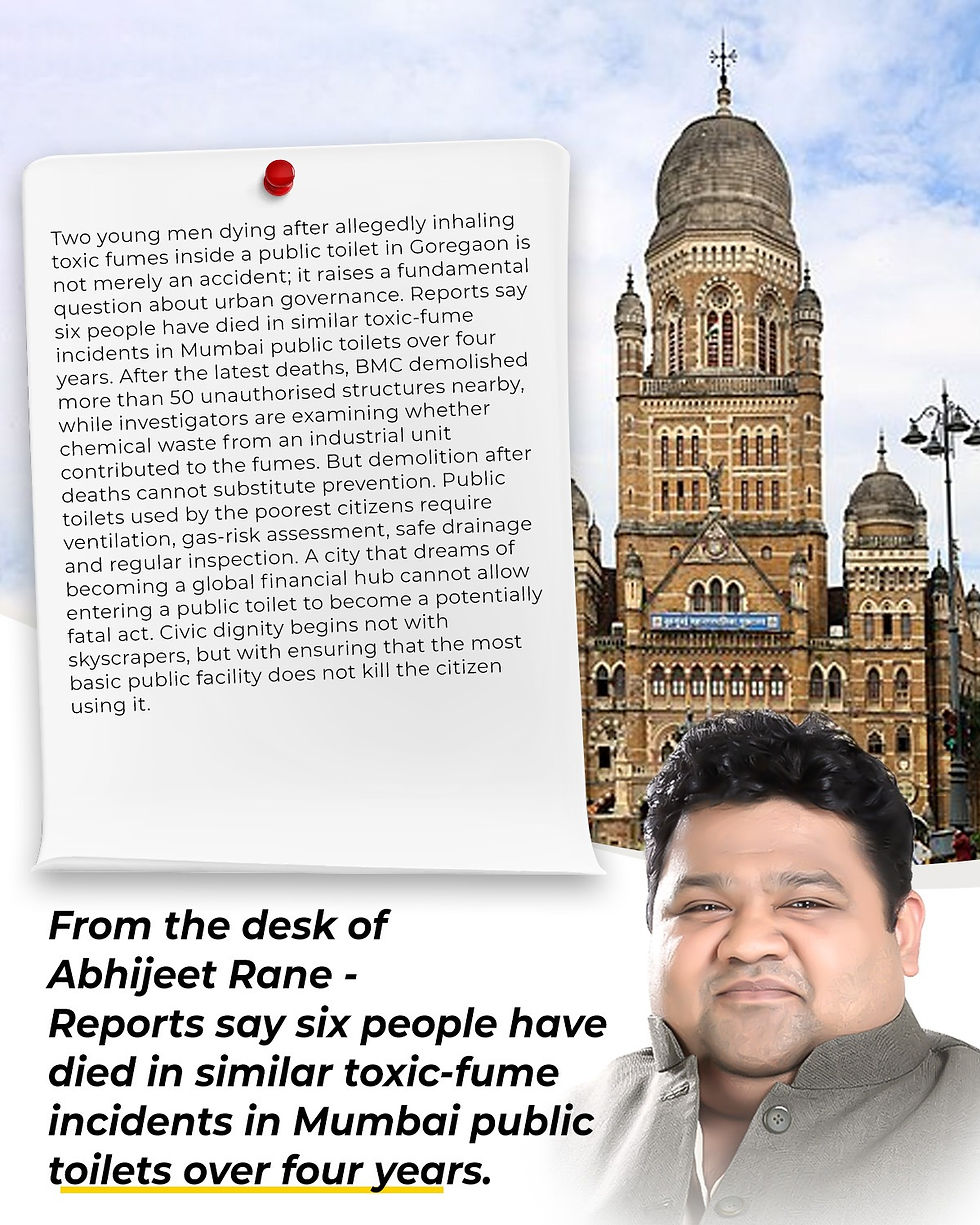
Two young men dying after allegedly inhaling toxic fumes inside a public toilet in Goregaon is not merely an accident; it raises a fundamental question about urban governance. Reports say six people have died in similar toxic-fume incidents in Mumbai public toilets over four years. After the latest deaths, BMC demolished more than 50 unauthorised structures nearby, while investigators are examining whether chemical waste from an industrial unit contributed to the fumes. But demolition after deaths cannot substitute prevention. Public toilets used by the poorest citizens require ventilation, gas-risk assessment, safe drainage and regular inspection. A city that dreams of becoming a global financial hub cannot allow entering a public toilet to become a potentially fatal act. Civic dignity begins not with skyscrapers, but with ensuring that the most basic public facility does not kill the citizen using it.
🔽
🖋️ *From The Desk of Abhijeet Rane*
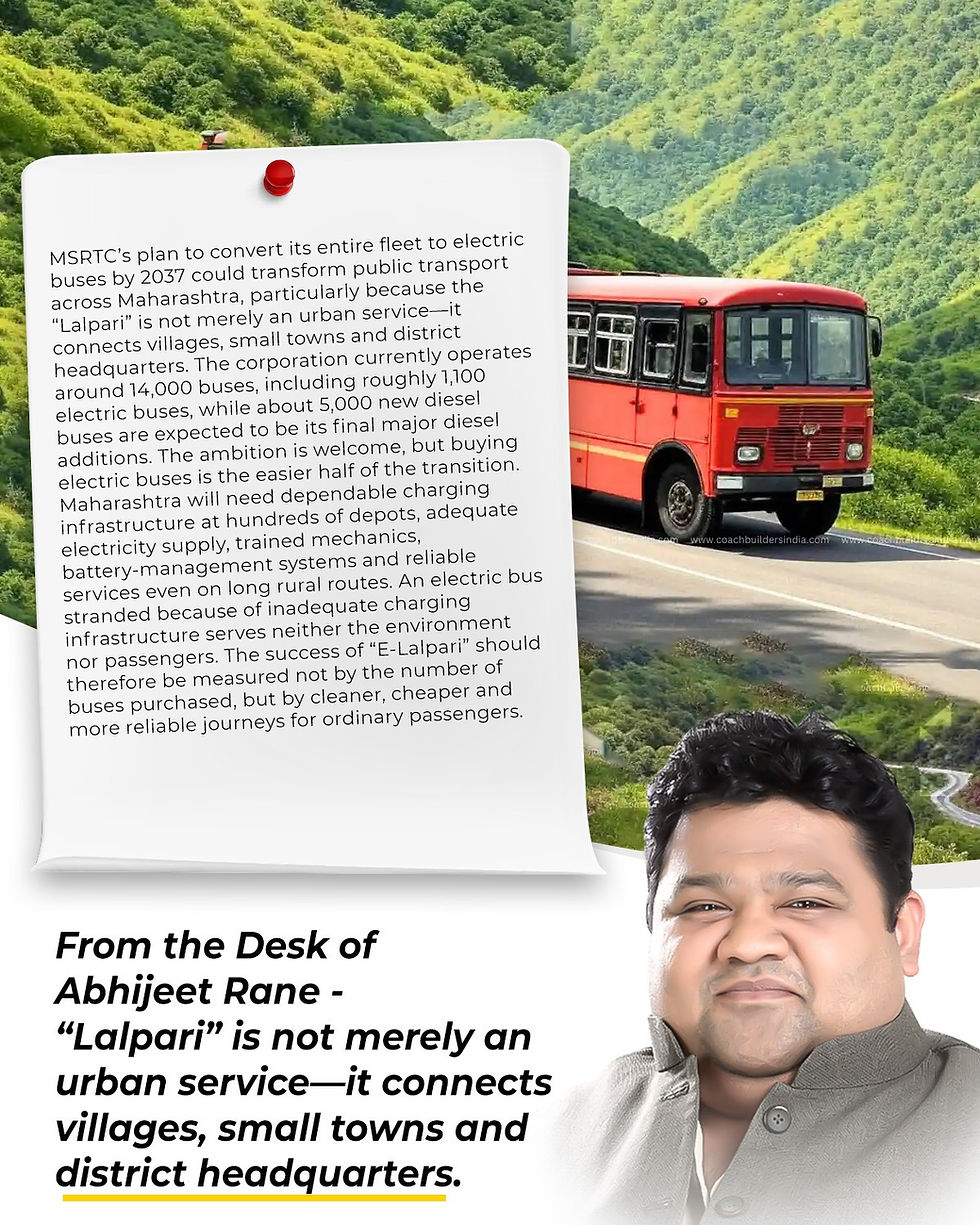
MSRTC’s plan to convert its entire fleet to electric buses by 2037 could transform public transport across Maharashtra, particularly because the “Lalpari” is not merely an urban service—it connects villages, small towns and district headquarters. The corporation currently operates around 14,000 buses, including roughly 1,100 electric buses, while about 5,000 new diesel buses are expected to be its final major diesel additions. The ambition is welcome, but buying electric buses is the easier half of the transition. Maharashtra will need dependable charging infrastructure at hundreds of depots, adequate electricity supply, trained mechanics, battery-management systems and reliable services even on long rural routes. An electric bus stranded because of inadequate charging infrastructure serves neither the environment nor passengers. The success of “E-Lalpari” should therefore be measured not by the number of buses purchased, but by cleaner, cheaper and more reliable journeys for ordinary passengers.
🔽
🖋️ *From The Desk of Abhijeet Rane*
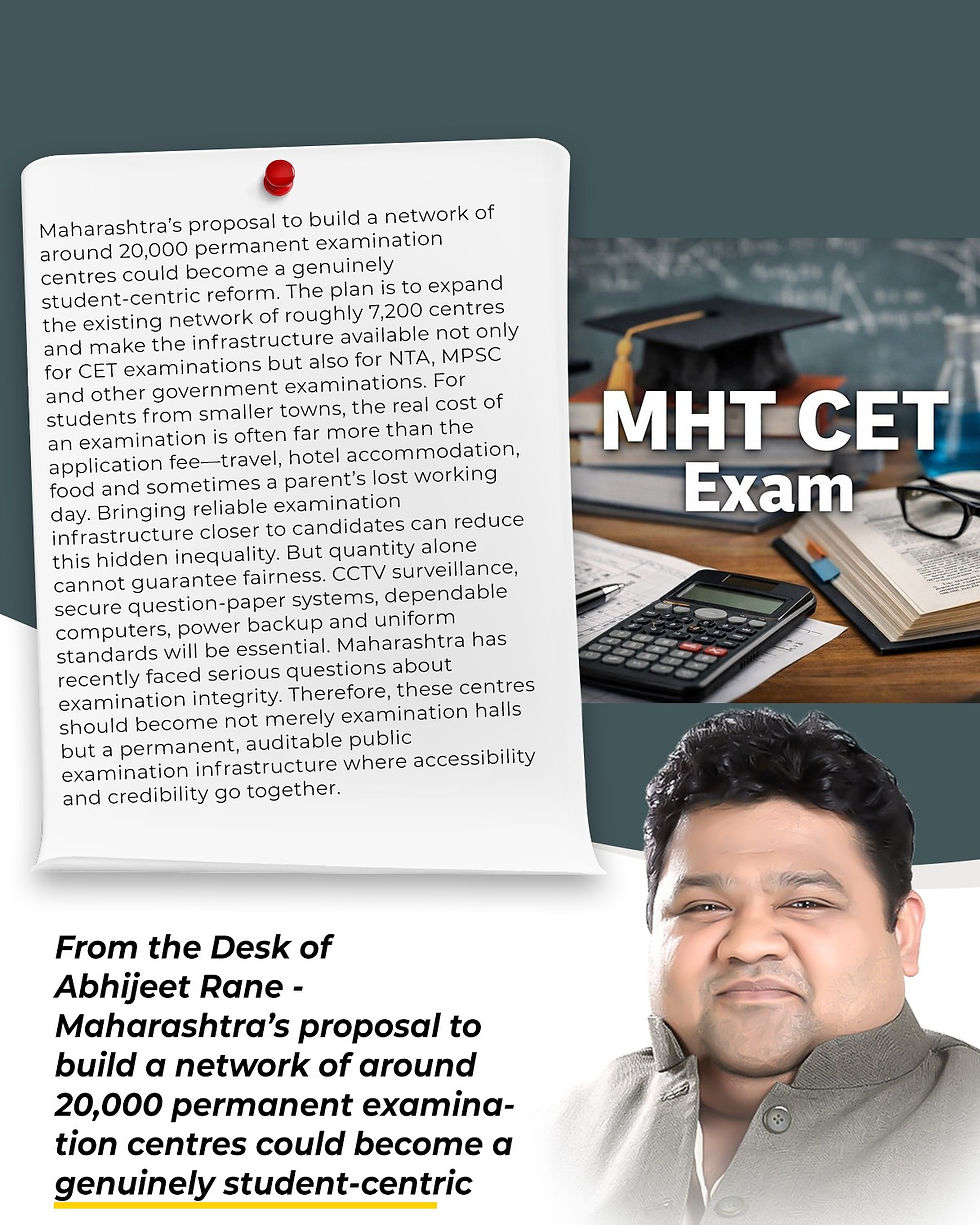
Maharashtra’s proposal to build a network of around 20,000 permanent examination centres could become a genuinely student-centric reform. The plan is to expand the existing network of roughly 7,200 centres and make the infrastructure available not only for CET examinations but also for NTA, MPSC and other government examinations. For students from smaller towns, the real cost of an examination is often far more than the application fee—travel, hotel accommodation, food and sometimes a parent’s lost working day. Bringing reliable examination infrastructure closer to candidates can reduce this hidden inequality. But quantity alone cannot guarantee fairness. CCTV surveillance, secure question-paper systems, dependable computers, power backup and uniform standards will be essential. Maharashtra has recently faced serious questions about examination integrity. Therefore, these centres should become not merely examination halls but a permanent, auditable public examination infrastructure where accessibility and credibility go together.
🔽
🖋️ *From The Desk of Abhijeet Rane*
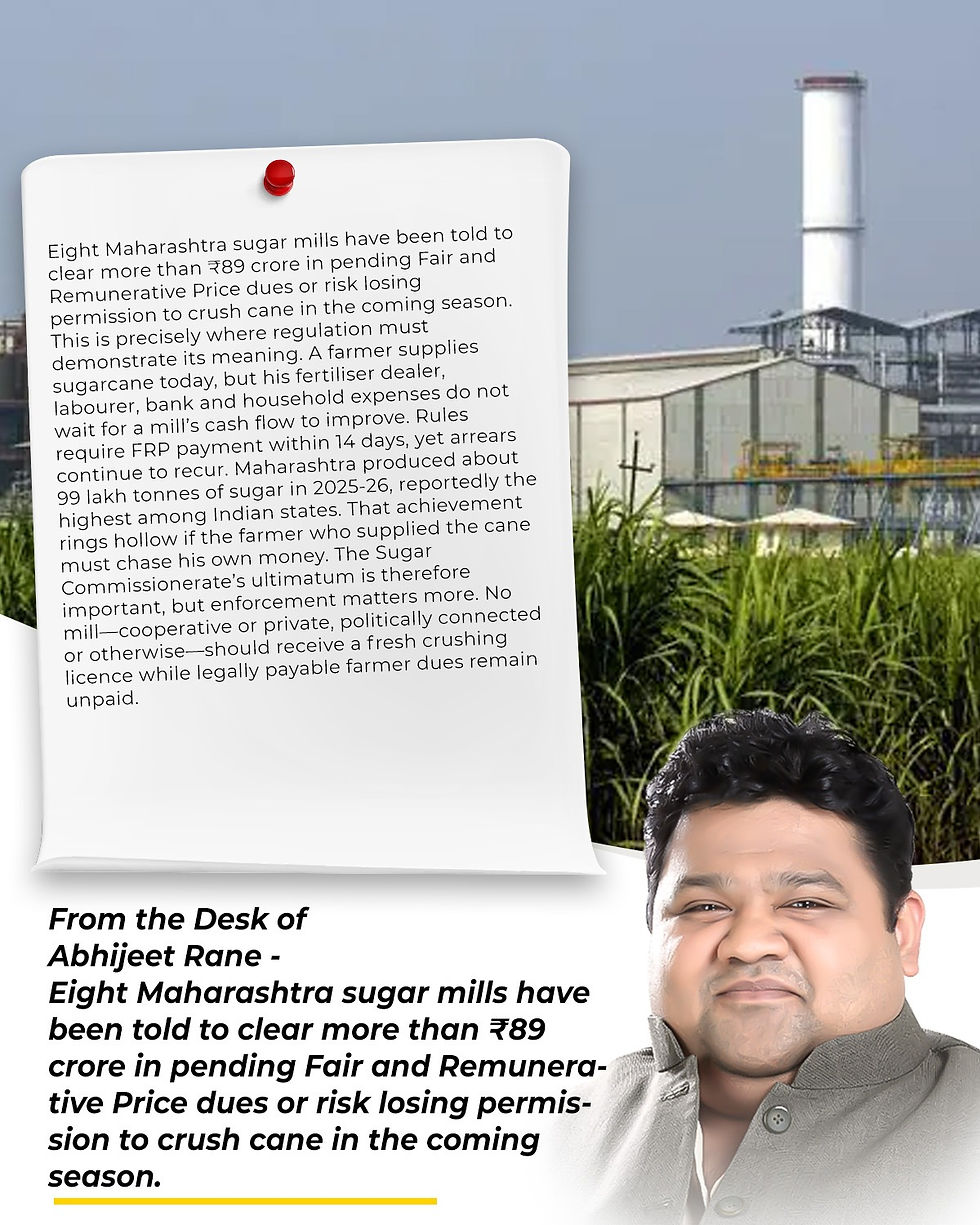
Eight Maharashtra sugar mills have been told to clear more than ₹89 crore in pending Fair and Remunerative Price dues or risk losing permission to crush cane in the coming season. This is precisely where regulation must demonstrate its meaning. A farmer supplies sugarcane today, but his fertiliser dealer, labourer, bank and household expenses do not wait for a mill’s cash flow to improve. Rules require FRP payment within 14 days, yet arrears continue to recur. Maharashtra produced about 99 lakh tonnes of sugar in 2025-26, reportedly the highest among Indian states. That achievement rings hollow if the farmer who supplied the cane must chase his own money. The Sugar Commissionerate’s ultimatum is therefore important, but enforcement matters more. No mill—cooperative or private, politically connected or otherwise—should receive a fresh crushing licence while legally payable farmer dues remain unpaid.
🔽
🖋️ *From The Desk of Abhijeet Rane*
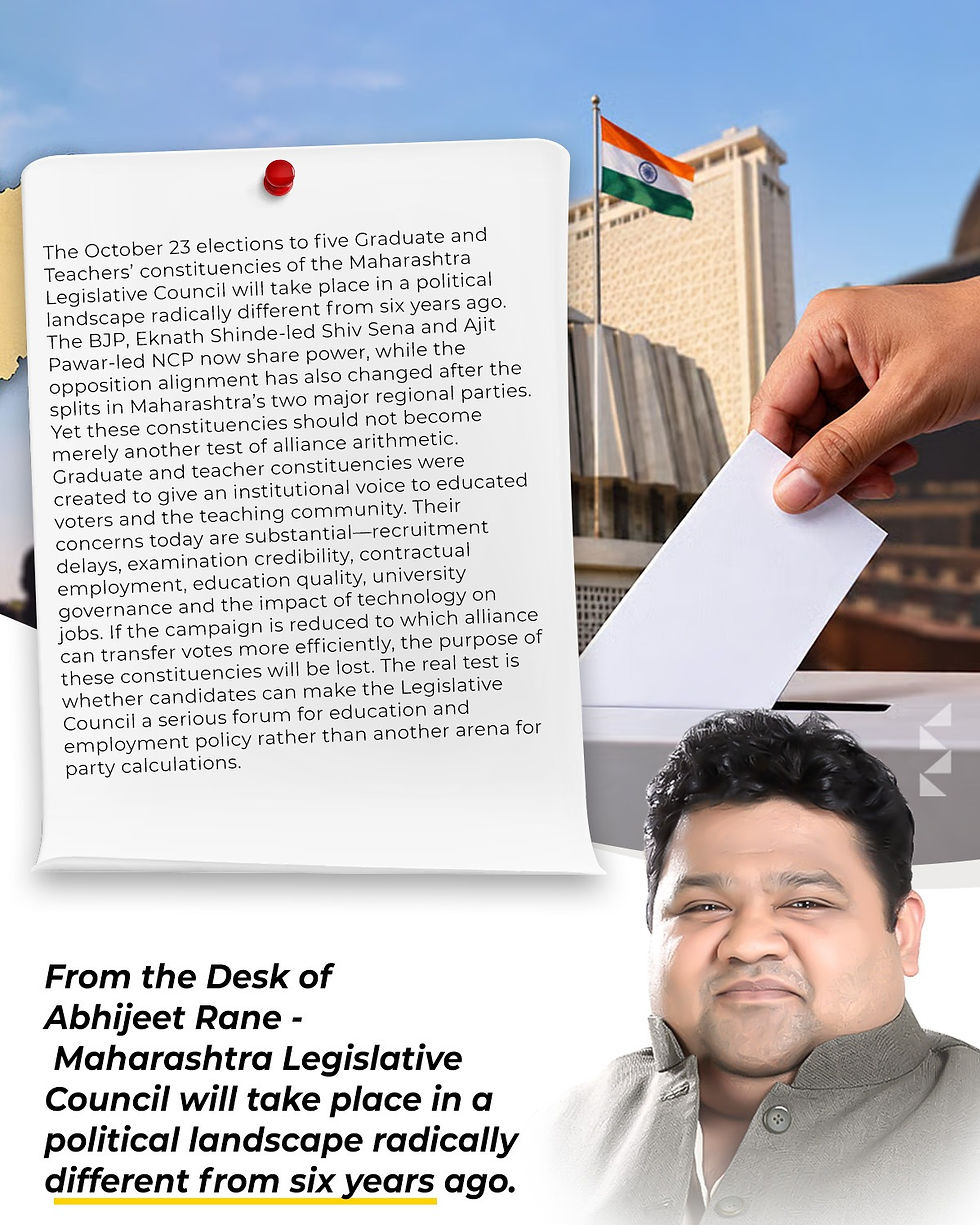
The October 23 elections to five Graduate and Teachers’ constituencies of the Maharashtra Legislative Council will take place in a political landscape radically different from six years ago. The BJP, Eknath Shinde-led Shiv Sena and Ajit Pawar-led NCP now share power, while the opposition alignment has also changed after the splits in Maharashtra’s two major regional parties. Yet these constituencies should not become merely another test of alliance arithmetic. Graduate and teacher constituencies were created to give an institutional voice to educated voters and the teaching community. Their concerns today are substantial—recruitment delays, examination credibility, contractual employment, education quality, university governance and the impact of technology on jobs. If the campaign is reduced to which alliance can transfer votes more efficiently, the purpose of these constituencies will be lost. The real test is whether candidates can make the Legislative Council a serious forum for education and employment policy rather than another arena for party calculations.
🔽
#AbhijeetRane #Maharashtra #MumbaiMitra #Governance #PublicIssues #MSRTC #Education #Farmers #FRP #MumbaiNews

Comments