


The MPSC Drug Inspector paper-leak investigation...
🖋️ *From The Desk of Abhijeet Rane*
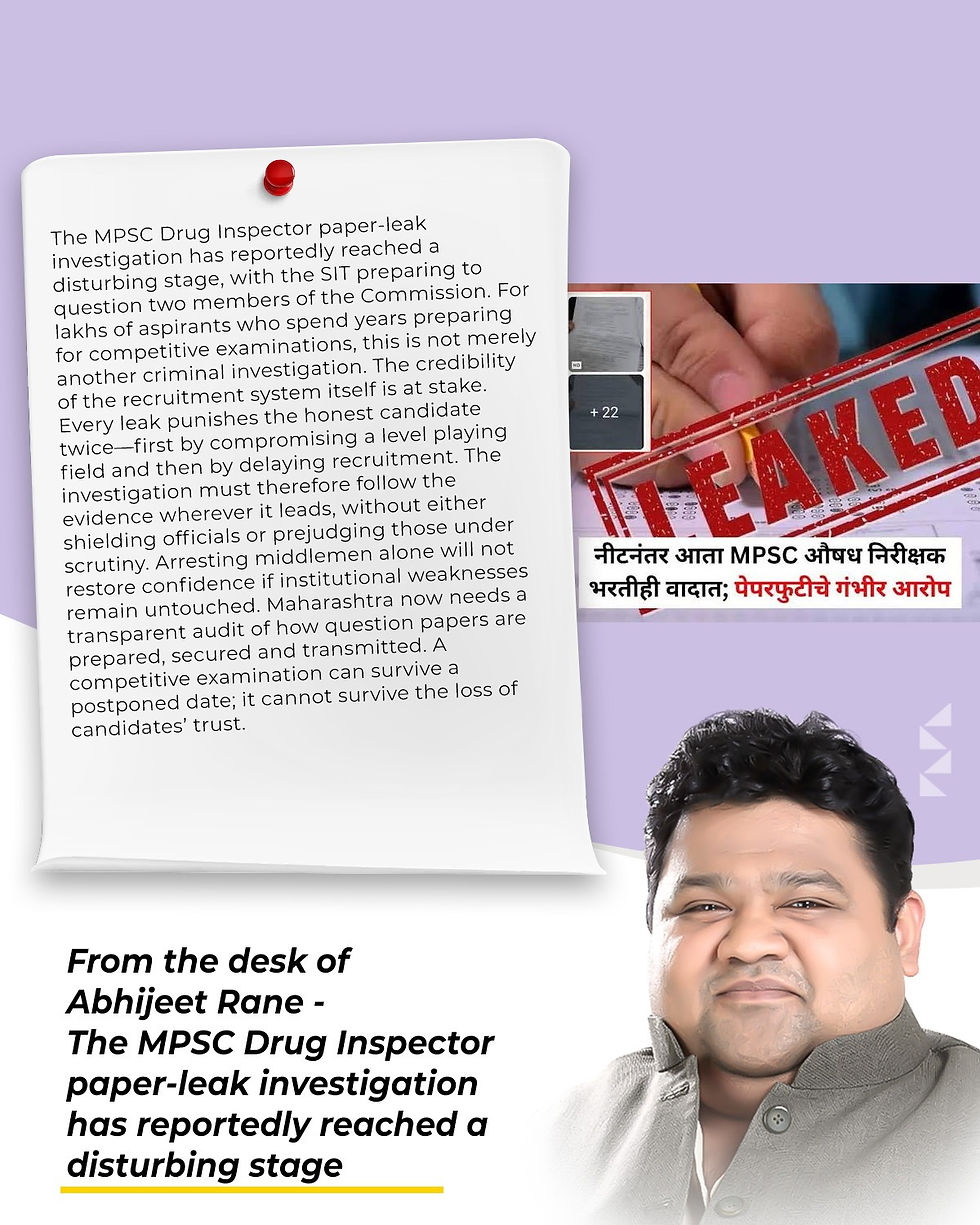
The MPSC Drug Inspector paper-leak investigation has reportedly reached a disturbing stage, with the SIT preparing to question two members of the Commission. For lakhs of aspirants who spend years preparing for competitive examinations, this is not merely another criminal investigation. The credibility of the recruitment system itself is at stake. Every leak punishes the honest candidate twice—first by compromising a level playing field and then by delaying recruitment. The investigation must therefore follow the evidence wherever it leads, without either shielding officials or prejudging those under scrutiny. Arresting middlemen alone will not restore confidence if institutional weaknesses remain untouched. Maharashtra now needs a transparent audit of how question papers are prepared, secured and transmitted. A competitive examination can survive a postponed date; it cannot survive the loss of candidates’ trust.
🔽
🖋️ *From The Desk of Abhijeet Rane*
The proposed ₹800-crore-plus battery R&D centre by COEP Technological University and JSW Projects could become far more significant than another large investment announcement. The Chikhali facility is planned to work on lithium-ion as well as other advanced battery chemistries, with prototyping, validation and pilot-scale capabilities; reports also project more than 1,000 ecosystem-linked jobs. India’s EV and renewable-energy ambitions will remain strategically vulnerable if critical battery technology continues to depend heavily on imported cells and know-how. Pune already possesses a strong automobile, engineering and academic ecosystem; connecting university research directly with industrial-scale development could turn that advantage into indigenous intellectual property and skilled employment. The real test, however, will be whether patents, commercially viable cells and manufacturing capabilities actually emerge. India does not merely need to assemble the technologies of tomorrow; it needs to invent and own some of them.
🔽
🖋️ *From The Desk of Abhijeet Rane*
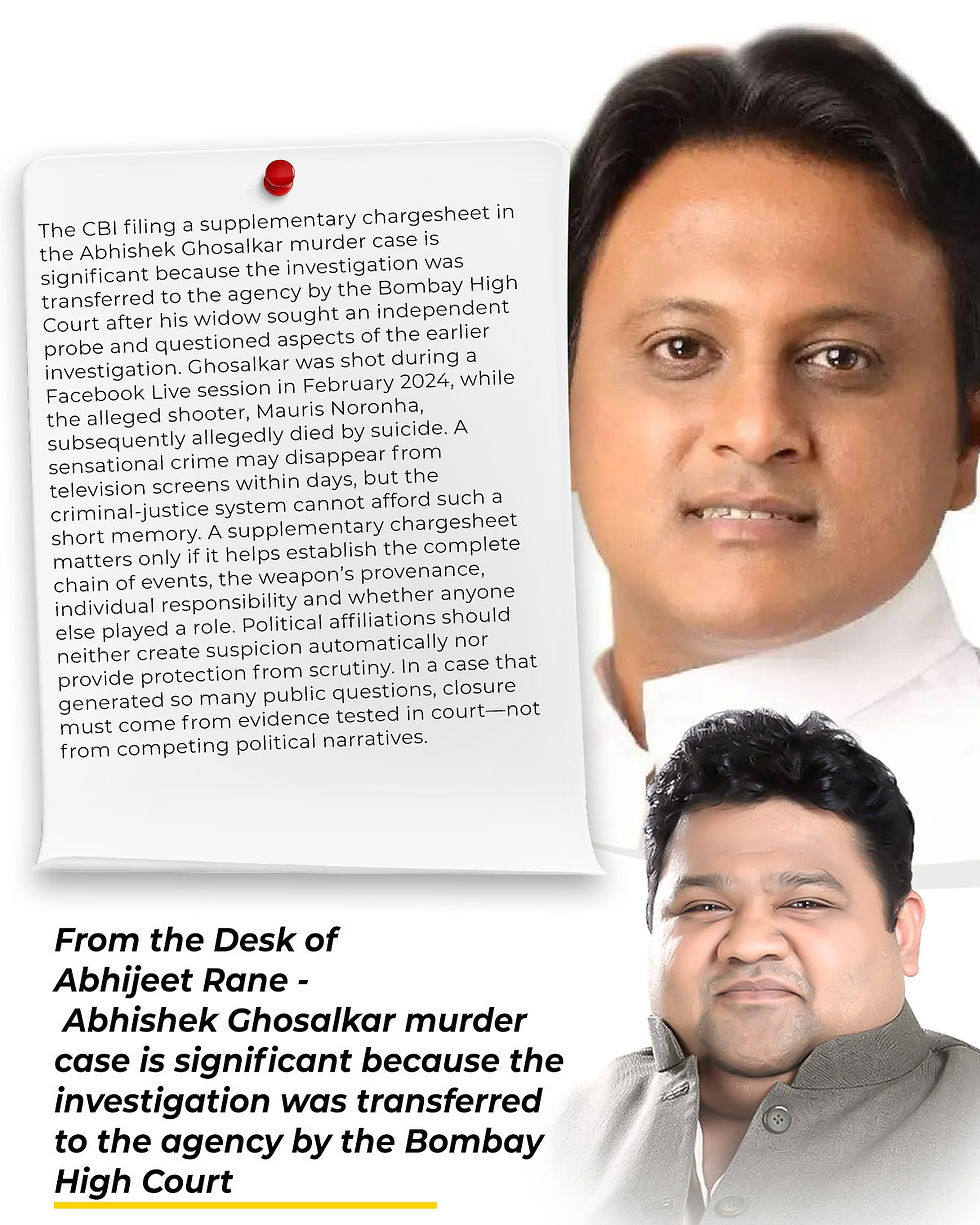
The CBI filing a supplementary chargesheet in the Abhishek Ghosalkar murder case is significant because the investigation was transferred to the agency by the Bombay High Court after his widow sought an independent probe and questioned aspects of the earlier investigation. Ghosalkar was shot during a Facebook Live session in February 2024, while the alleged shooter, Mauris Noronha, subsequently allegedly died by suicide. A sensational crime may disappear from television screens within days, but the criminal-justice system cannot afford such a short memory. A supplementary chargesheet matters only if it helps establish the complete chain of events, the weapon’s provenance, individual responsibility and whether anyone else played a role. Political affiliations should neither create suspicion automatically nor provide protection from scrutiny. In a case that generated so many public questions, closure must come from evidence tested in court—not from competing political narratives.
🔽
🖋️ *From The Desk of Abhijeet Rane*
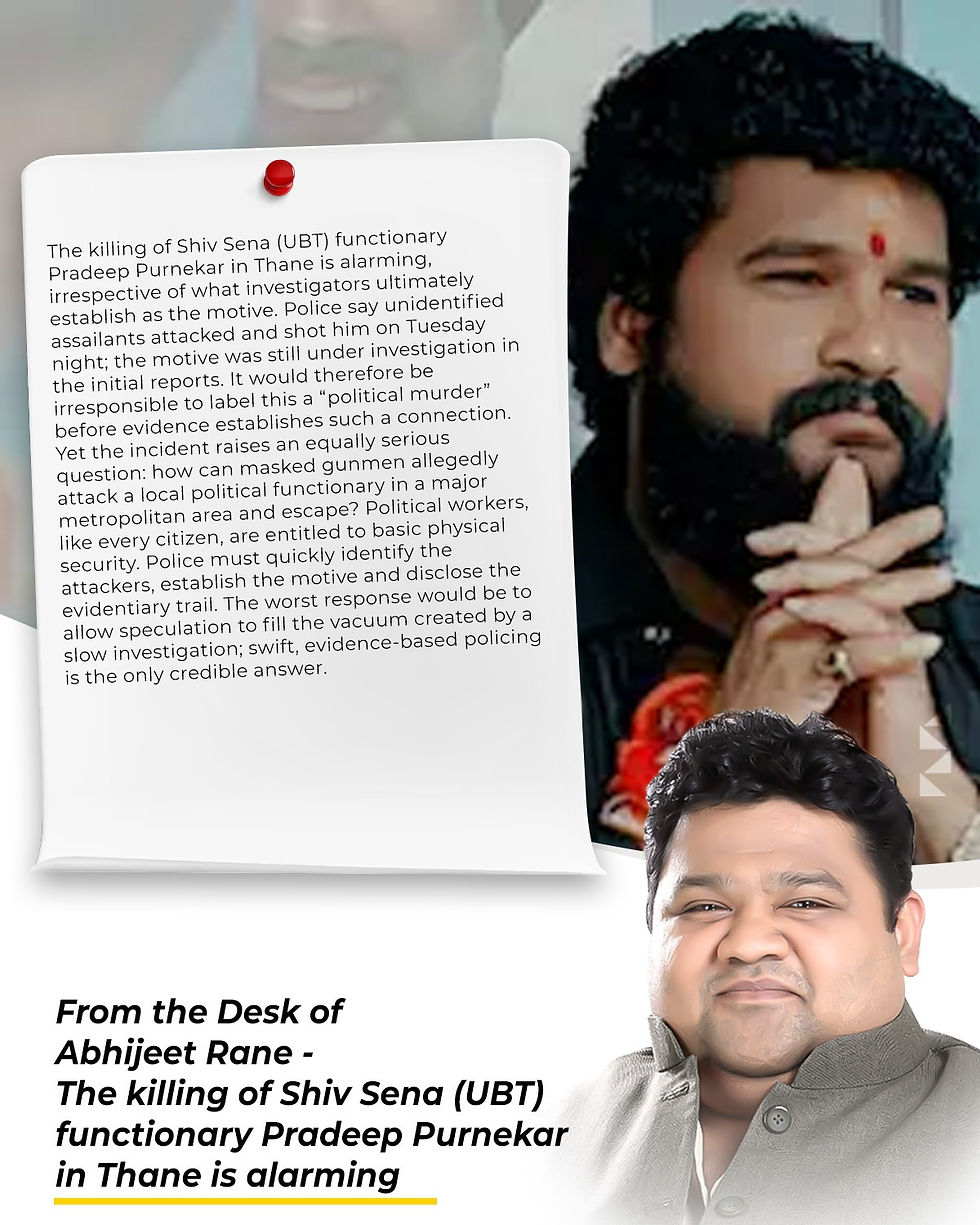
The killing of Shiv Sena (UBT) functionary Pradeep Purnekar in Thane is alarming, irrespective of what investigators ultimately establish as the motive. Police say unidentified assailants attacked and shot him on Tuesday night; the motive was still under investigation in the initial reports. It would therefore be irresponsible to label this a “political murder” before evidence establishes such a connection. Yet the incident raises an equally serious question: how can masked gunmen allegedly attack a local political functionary in a major metropolitan area and escape? Political workers, like every citizen, are entitled to basic physical security. Police must quickly identify the attackers, establish the motive and disclose the evidentiary trail. The worst response would be to allow speculation to fill the vacuum created by a slow investigation; swift, evidence-based policing is the only credible answer.
🔽
🖋️ *From The Desk of Abhijeet Rane*
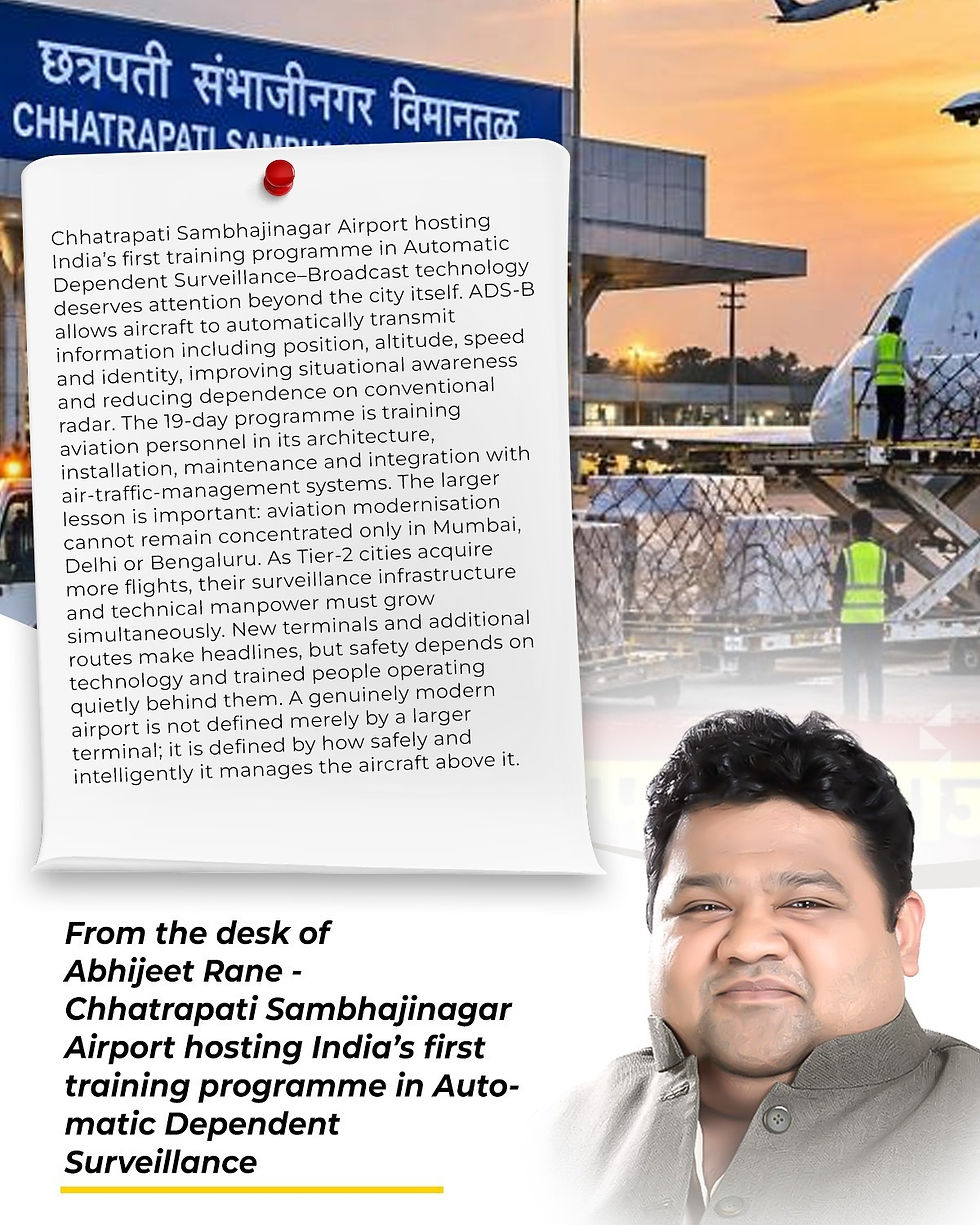
Chhatrapati Sambhajinagar Airport hosting India’s first training programme in Automatic Dependent Surveillance–Broadcast technology deserves attention beyond the city itself. ADS-B allows aircraft to automatically transmit information including position, altitude, speed and identity, improving situational awareness and reducing dependence on conventional radar. The 19-day programme is training aviation personnel in its architecture, installation, maintenance and integration with air-traffic-management systems. The larger lesson is important: aviation modernisation cannot remain concentrated only in Mumbai, Delhi or Bengaluru. As Tier-2 cities acquire more flights, their surveillance infrastructure and technical manpower must grow simultaneously. New terminals and additional routes make headlines, but safety depends on technology and trained people operating quietly behind them. A genuinely modern airport is not defined merely by a larger terminal; it is defined by how safely and intelligently it manages the aircraft above it.
🔽
#AbhijeetRane #Maharashtra #MPSC #Youth #Jobs #Education #Technology #EVIndia #CBI #Justice #Crime #Thane #Aviation #AirportSafety #MumbaiMitra

Comments