


At the G7 summit, Prime Minister Modi broke the usual script of diplomatic...
🖋️ *From The Desk of Abhijeet Rane*
At the G7 summit, Prime Minister Modi broke the usual script of diplomatic pleasantries by directly confronting President Trump over the June 11 Amman strike that killed three Indians. Sitting beside Trump, Modi’s words carried the weight of anger and urgency: trust between nations is eroding, and the future of global partnerships depends on rebuilding it. He declared that the world is not suffering from a shortage of resources but from a shortage of trust. Modi’s outrage over Indian lives lost was unmistakable—he warned that as long as innocent citizens are targeted, talk of peace remains hollow. His message was sharp: peace must be lived on the ground, not just spoken in declarations. In that moment, Modi signaled India’s refusal to stay silent when its people are endangered.
🔽
🖋️ *From The Desk of Abhijeet Rane*
Who would have imagined India’s FCRA could unite America’s divided politics? On Capitol Hill, Democrats and Republicans alike have raised objections to India’s proposed changes in the Foreign Contribution Regulation Act. Under FCRA rules, any organization whose registration is canceled or expired cannot receive foreign funds. This has directly hit missionary groups engaged in religious conversions, as losing registration means losing their financial lifeline. The fallout is clear: in coming days, Western media and NGOs will flood narratives portraying India as a country stifling religious freedom, choking NGOs, and silencing human rights voices. The strategy is already visible—using India’s regulatory tightening as a global talking point to pressure New Delhi, while ignoring the fact that the law primarily curbs foreign influence in sensitive domestic activities.
🔽
🖋️ *From The Desk of Abhijeet Rane*
The war meant to destroy Iran ended up reshaping global power. On February 28, America and Israel struck hard, wiping out Iran’s top leadership within hours, but Iran had prepared for years with multiple strategies ready. By closing the Strait of Hormuz, attacking U.S. bases, and countering Israel, Iran forced the world into the conflict, creating an energy lockdown that made other nations plead for peace. With covert backing from China and Russia, Iran turned defense into offense, stretching the war to strengthen its bargaining position. Muslim nations rallied behind it, and even internal U.S. pressure pushed Trump toward exit. What began as devastation became Iran’s strategic victory—weakening Israel, reshaping alliances, and positioning Iran as a rising superpower. This war will be remembered for Iran’s resilience and global recalibration.
🔽
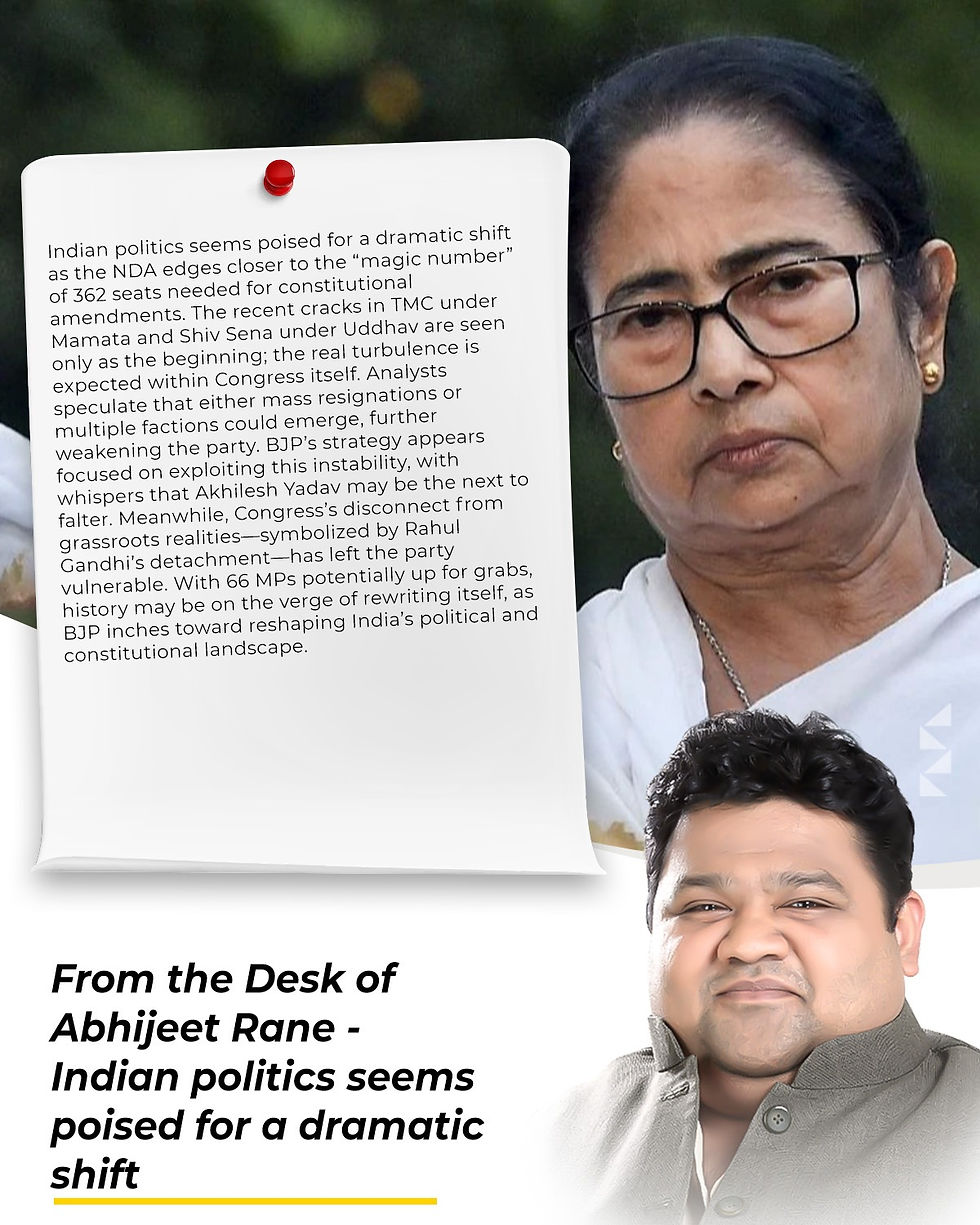
🖋️ *From The Desk of Abhijeet Rane*
Indian politics seems poised for a dramatic shift as the NDA edges closer to the “magic number” of 362 seats needed for constitutional amendments. The recent cracks in TMC under Mamata and Shiv Sena under Uddhav are seen only as the beginning; the real turbulence is expected within Congress itself. Analysts speculate that either mass resignations or multiple factions could emerge, further weakening the party. BJP’s strategy appears focused on exploiting this instability, with whispers that Akhilesh Yadav may be the next to falter. Meanwhile, Congress’s disconnect from grassroots realities—symbolized by Rahul Gandhi’s detachment—has left the party vulnerable. With 66 MPs potentially up for grabs, history may be on the verge of rewriting itself, as BJP inches toward reshaping India’s political and constitutional landscape.
🔽
🖋️ *From The Desk of Abhijeet Rane*
From The Desk of Abhijeet Rane,
The latest speculation around the Samajwadi Party highlights how shifting alliances and internal strains could reshape India’s opposition landscape. Akhilesh Yadav, once seen as a steady challenger in Uttar Pradesh, now faces mounting pressure as whispers grow about defections and fractures within his party. The broader narrative suggests that after Uddhav’s Shiv Sena split, the next “target” may indeed be SP, with Congress itself bracing for deeper turmoil. If cracks widen, BJP could find itself edging closer to the numbers required for constitutional change, altering the balance of power in unprecedented ways. What stands out is the recurring theme: opposition parties struggling to hold their ground against relentless political engineering. Whether SP withstands this storm or becomes another casualty will define the next chapter in India’s volatile political theatre.
🔽
#G7Summit #IndiaUSRelations #Diplomacy #GlobalTrust #ForeignPolicy #FCRA #InternationalRelationsIran #Israel #MiddleEast #Geopolitics #IndiaPolicy #StraitOfHormuz #EnergySecurity #ForeignFunding #NGOs #ReligiousFreedom #IndianPolitics #NDA #BJP #Congress #SamajwadiParty #OppositionPolitics #UttarPradesh #IndianPolitics



Comments