


Telangana BJP MP and Lok Sabha Whip Konda Vishweshwar Reddy...
🖋️ *From The Desk of Abhijeet Rane*
Telangana BJP MP and Lok Sabha Whip Konda Vishweshwar Reddy has taken a commendable initiative to educate the public about energy transition. By logically explaining the differences between petrol and ethanol-blend fuels, he highlighted the environmental benefits of bio-fuels through a simple, scientific approach. To counter opposition narratives regarding E-20 fuel, such grassroot awareness drives are essential. If BJP leaders—from MPs to corporators—adopt this model in their constituencies, it will effectively debunk misleading propaganda using facts and technology. Recognizing the impact of this logical outreach, the BJP central leadership reportedly plans to replicate this public awareness drive nationwide. Educating citizens directly on government policies ensures that voters rely on scientific reality rather than falling prey to political misconceptions.
🔽
🖋️ *From The Desk of Abhijeet Rane*
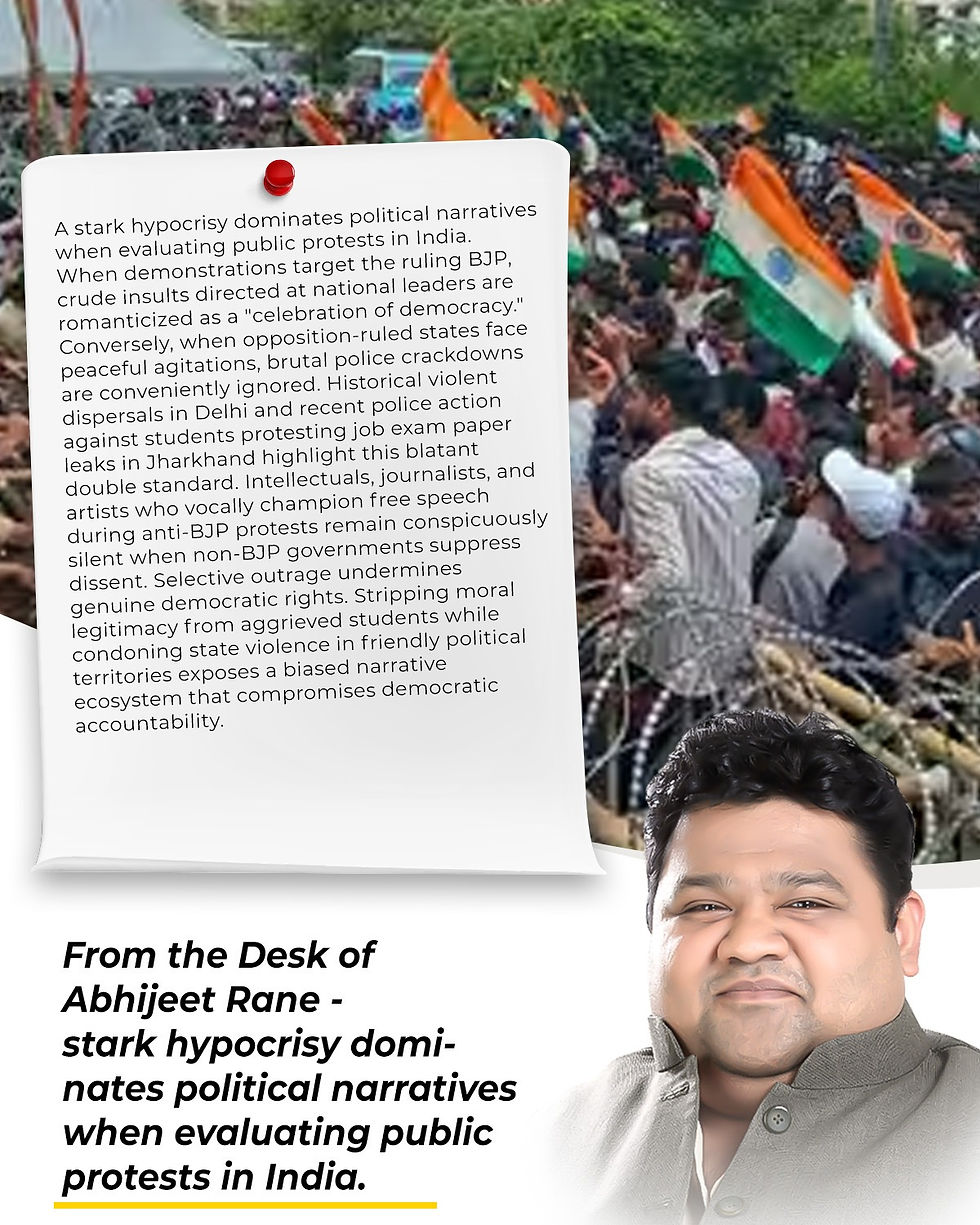
A stark hypocrisy dominates political narratives when evaluating public protests in India. When demonstrations target the ruling BJP, crude insults directed at national leaders are romanticized as a "celebration of democracy." Conversely, when opposition-ruled states face peaceful agitations, brutal police crackdowns are conveniently ignored. Historical violent dispersals in Delhi and recent police action against students protesting job exam paper leaks in Jharkhand highlight this blatant double standard. Intellectuals, journalists, and artists who vocally champion free speech during anti-BJP protests remain conspicuously silent when non-BJP governments suppress dissent. Selective outrage undermines genuine democratic rights. Stripping moral legitimacy from aggrieved students while condoning state violence in friendly political territories exposes a biased narrative ecosystem that compromises democratic accountability.
🔽
🖋️ *From The Desk of Abhijeet Rane*
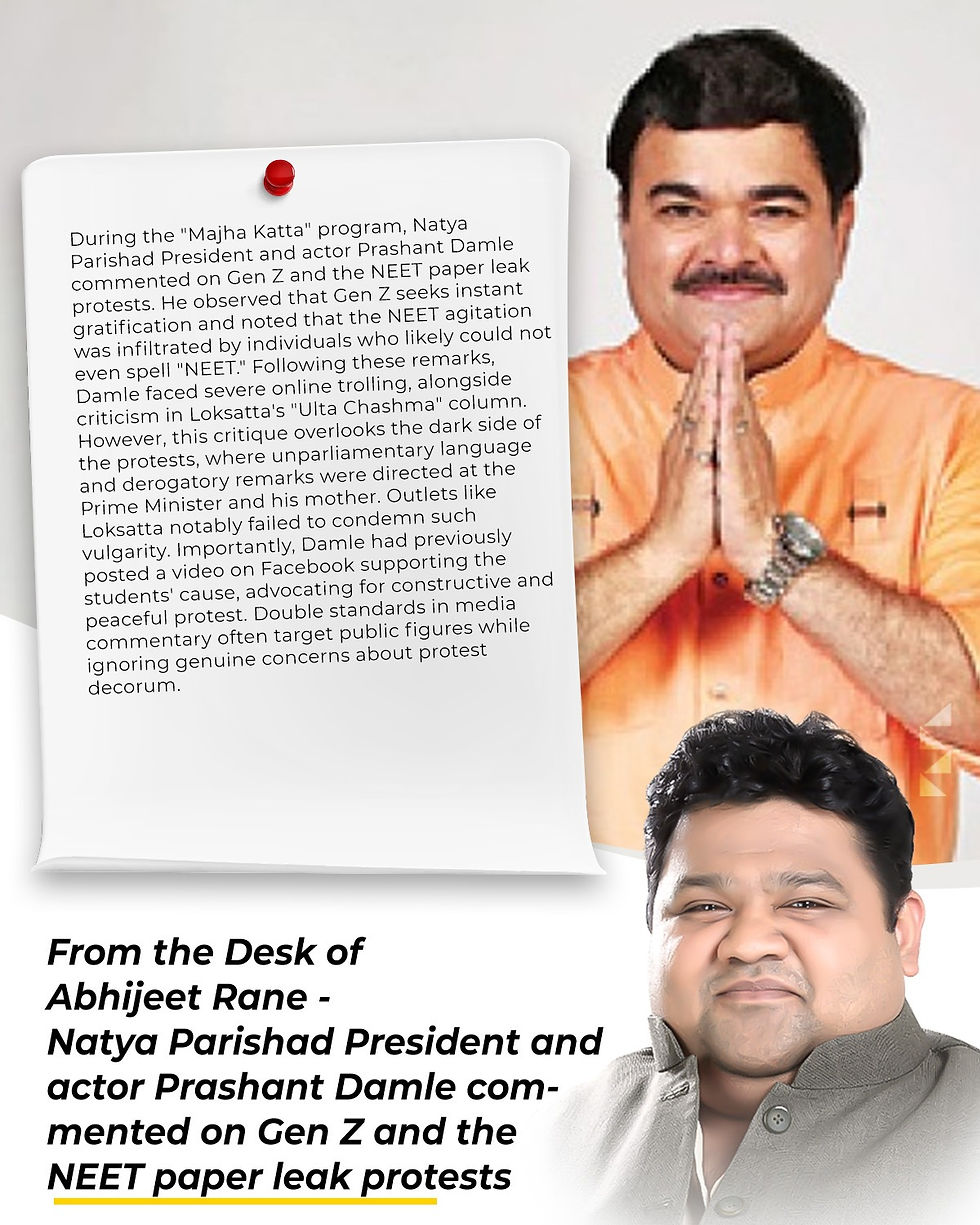
During the "Majha Katta" program, Natya Parishad President and actor Prashant Damle commented on Gen Z and the NEET paper leak protests. He observed that Gen Z seeks instant gratification and noted that the NEET agitation was infiltrated by individuals who likely could not even spell "NEET." Following these remarks, Damle faced severe online trolling, alongside criticism in Loksatta's "Ulta Chashma" column. However, this critique overlooks the dark side of the protests, where unparliamentary language and derogatory remarks were directed at the Prime Minister and his mother. Outlets like Loksatta notably failed to condemn such vulgarity. Importantly, Damle had previously posted a video on Facebook supporting the students' cause, advocating for constructive and peaceful protest. Double standards in media commentary often target public figures while ignoring genuine concerns about protest decorum.
🔽
🖋️ *From The Desk of Abhijeet Rane*
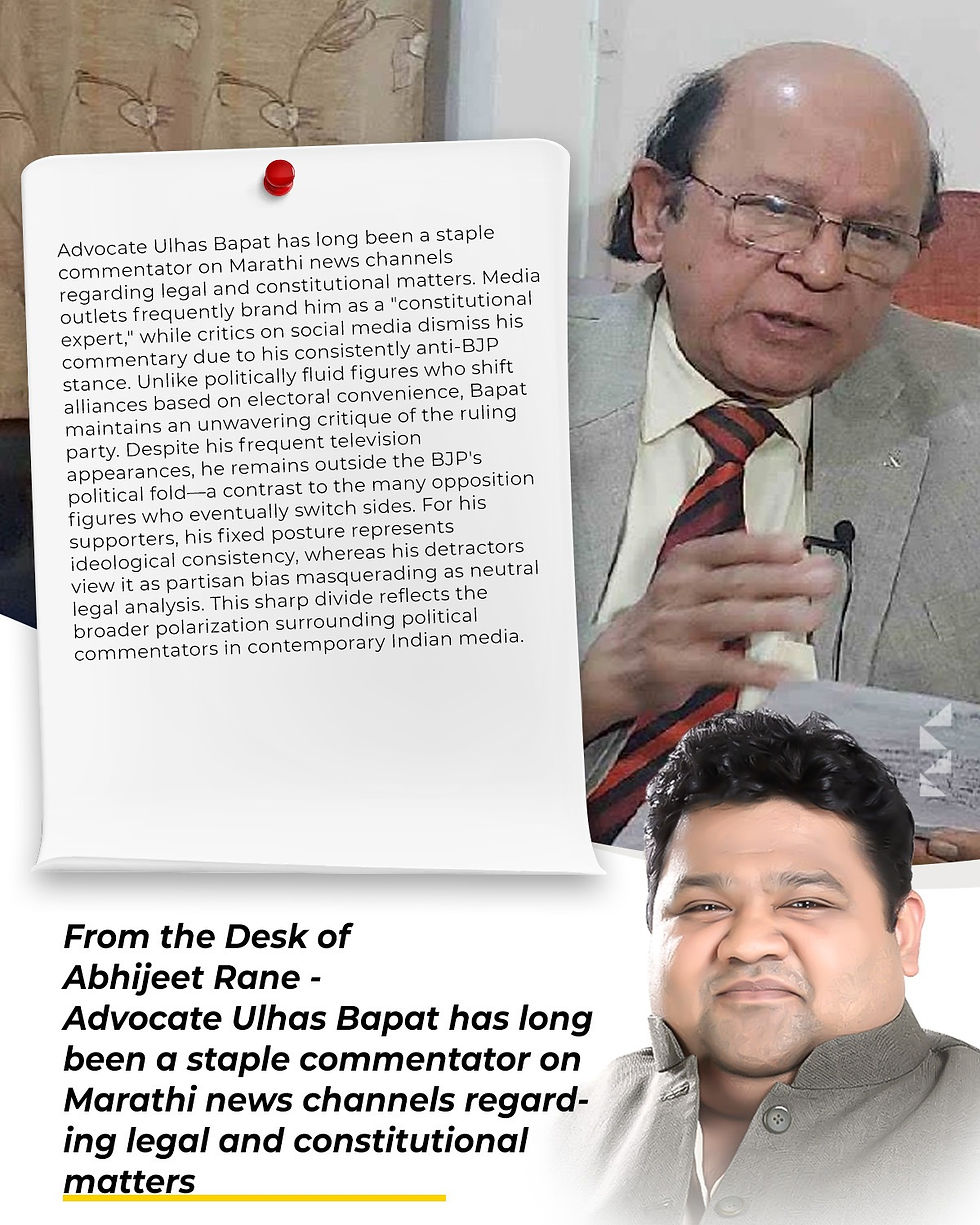
Advocate Ulhas Bapat has long been a staple commentator on Marathi news channels regarding legal and constitutional matters. Media outlets frequently brand him as a "constitutional expert," while critics on social media dismiss his commentary due to his consistently anti-BJP stance. Unlike politically fluid figures who shift alliances based on electoral convenience, Bapat maintains an unwavering critique of the ruling party. Despite his frequent television appearances, he remains outside the BJP's political fold—a contrast to the many opposition figures who eventually switch sides. For his supporters, his fixed posture represents ideological consistency, whereas his detractors view it as partisan bias masquerading as neutral legal analysis. This sharp divide reflects the broader polarization surrounding political commentators in contemporary Indian media.
🔽
🖋️ *From The Desk of Abhijeet Rane*
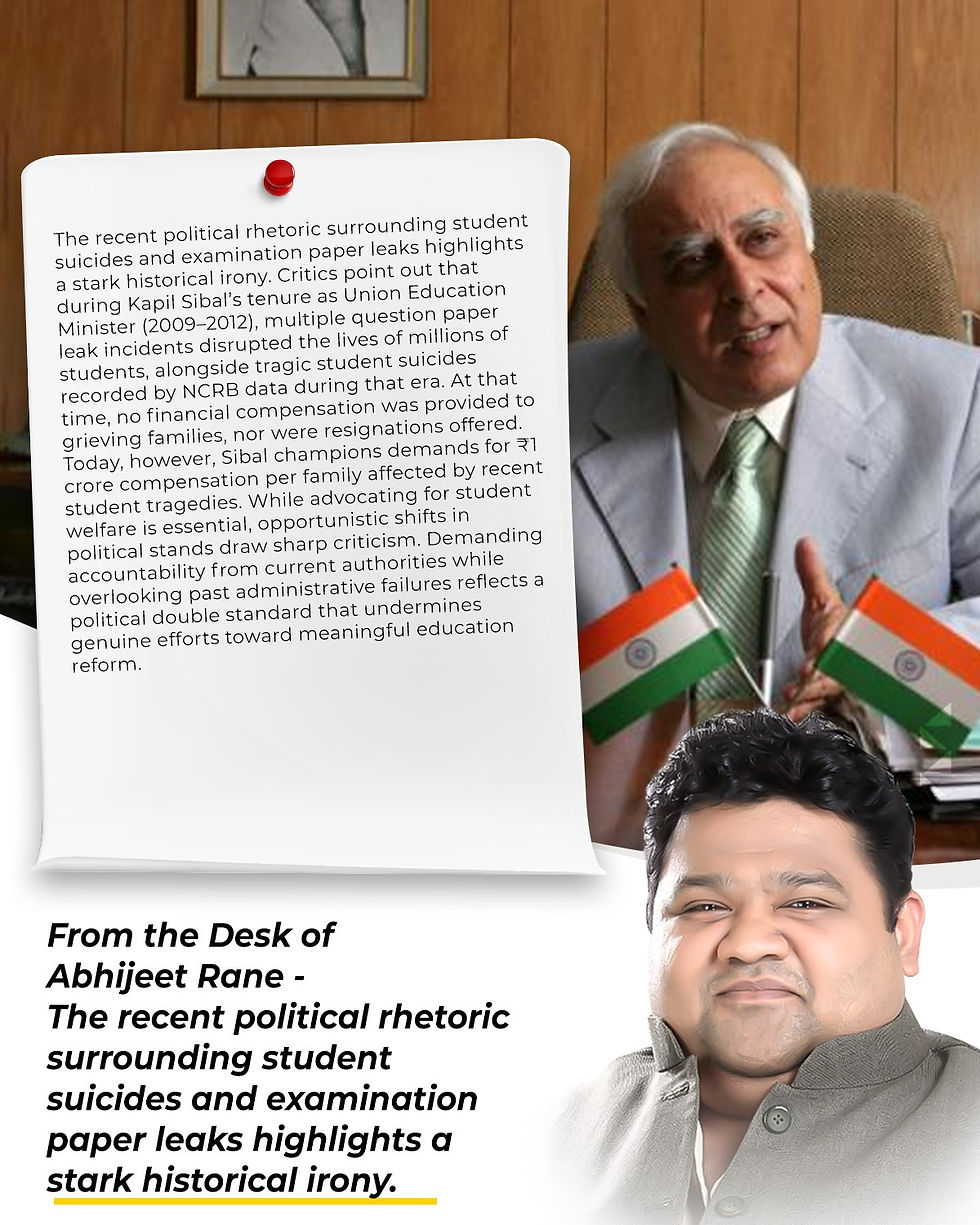
The recent political rhetoric surrounding student suicides and examination paper leaks highlights a stark historical irony. Critics point out that during Kapil Sibal’s tenure as Union Education Minister (2009–2012), multiple question paper leak incidents disrupted the lives of millions of students, alongside tragic student suicides recorded by NCRB data during that era. At that time, no financial compensation was provided to grieving families, nor were resignations offered. Today, however, Sibal champions demands for ₹1 crore compensation per family affected by recent student tragedies. While advocating for student welfare is essential, opportunistic shifts in political stands draw sharp criticism. Demanding accountability from current authorities while overlooking past administrative failures reflects a political double standard that undermines genuine efforts toward meaningful education reform.
🔽


Comments