


The recent shift in Maharashtra's dairy...
🖋️ *From The Desk of Abhijeet Rane*
The recent shift in Maharashtra's dairy sector highlights a profound transformation driven by effective governance and fair pricing. Rising purchase rates at dairies have led farmers to stop door-to-door loose milk sales, choosing instead to supply directly to dairy centers. This transition saves valuable morning hours, eliminates month-end collection hassles, and allows farmers to focus more on agriculture. Furthermore, dairies' emphasis on modern packaging ensures higher quality, safety, and hygiene—a positive "ground effect" visible even at the taluka level. If visionary administrators like Tukaram Mundhe continue leading regulatory bodies for a few more years, Maharashtra could easily set a national benchmark as a 'Safe Food' model state. Ultimately, this change optimizes farmers' time, effort, and income through impactful, grassroots-level administrative action.
🔽
🖋️ *From The Desk of Abhijeet Rane*
The emerging defense pact between Saudi Arabia, Pakistan, and Turkey presents a complex geopolitical shift in the Middle East and South Asia, introducing a notable strategic challenge for India. Turkey’s advanced defense manufacturing, combined with Pakistan’s military manpower and Saudi Arabia’s financial backing, forms a powerful trilateral axis. For New Delhi, this alignment requires careful navigation. India has spent years cultivating strong economic, energy, and security ties with Riyadh to counterbalance Islamabad's regional influence.While Saudi Arabia remains a crucial partner for India’s energy security and trade, its defense integration with Pakistan and Ankara could complicate India’s maritime security and regional influence. To safeguard its national interests, India must leverage its growing diplomatic weight, strengthen bilateral partnerships in the Gulf, and enhance its own defense readiness to effectively balance this evolving alliance.
🔽
🖋️ *From The Desk of Abhijeet Rane*
Union Home Minister Amit Shah's announcement to relocate the headquarters of the National Urban Co-operative Finance and Development Corporation from Delhi to Mumbai marks a strategic political masterstroke. For years, Shiv Sena (UBT) leaders—including Uddhav Thackeray, Aaditya Thackeray, and Sanjay Raut—have relentlessly accused the BJP-led Central government of systematically siphoning major institutions and economic powerhouses away from Mumbai to Gujarat. By shifting a vital financial body directly into the heart of Maharashtra's capital, Shah has effectively dismantled a primary narrative used by the opposition to fuel regional pride and criticize the ruling coalition. This move not only reinforces Mumbai’s status as India’s undisputed financial hub but also deprives Shiv Sena (UBT) of a key plank ahead of upcoming political battles.
🔽
🖋️ *From The Desk of Abhijeet Rane*
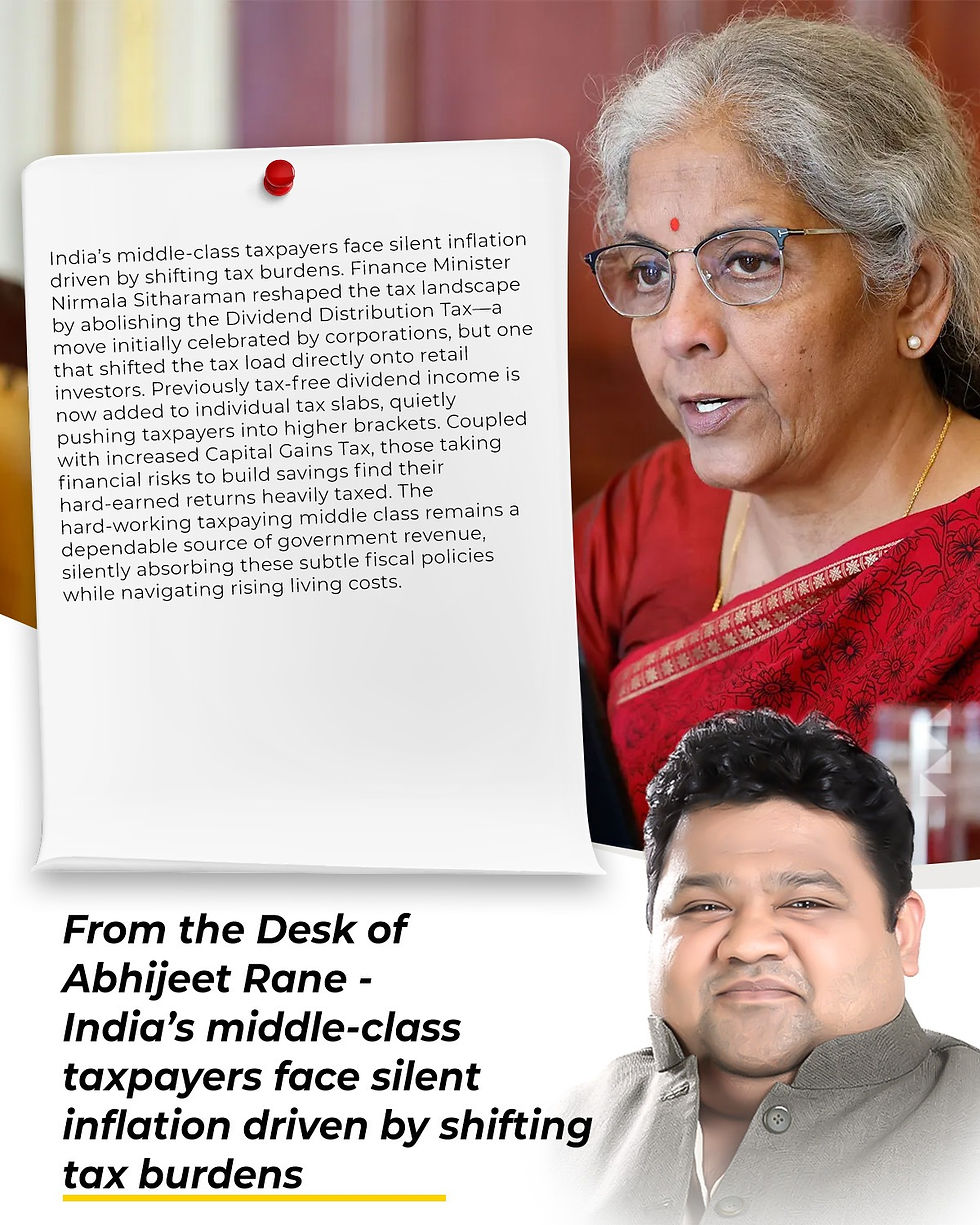
India’s middle-class taxpayers face silent inflation driven by shifting tax burdens. Finance Minister Nirmala Sitharaman reshaped the tax landscape by abolishing the Dividend Distribution Tax—a move initially celebrated by corporations, but one that shifted the tax load directly onto retail investors. Previously tax-free dividend income is now added to individual tax slabs, quietly pushing taxpayers into higher brackets. Coupled with increased Capital Gains Tax, those taking financial risks to build savings find their hard-earned returns heavily taxed. The hard-working taxpaying middle class remains a dependable source of government revenue, silently absorbing these subtle fiscal policies while navigating rising living costs.
🔽
🖋️ *From The Desk of Abhijeet Rane*
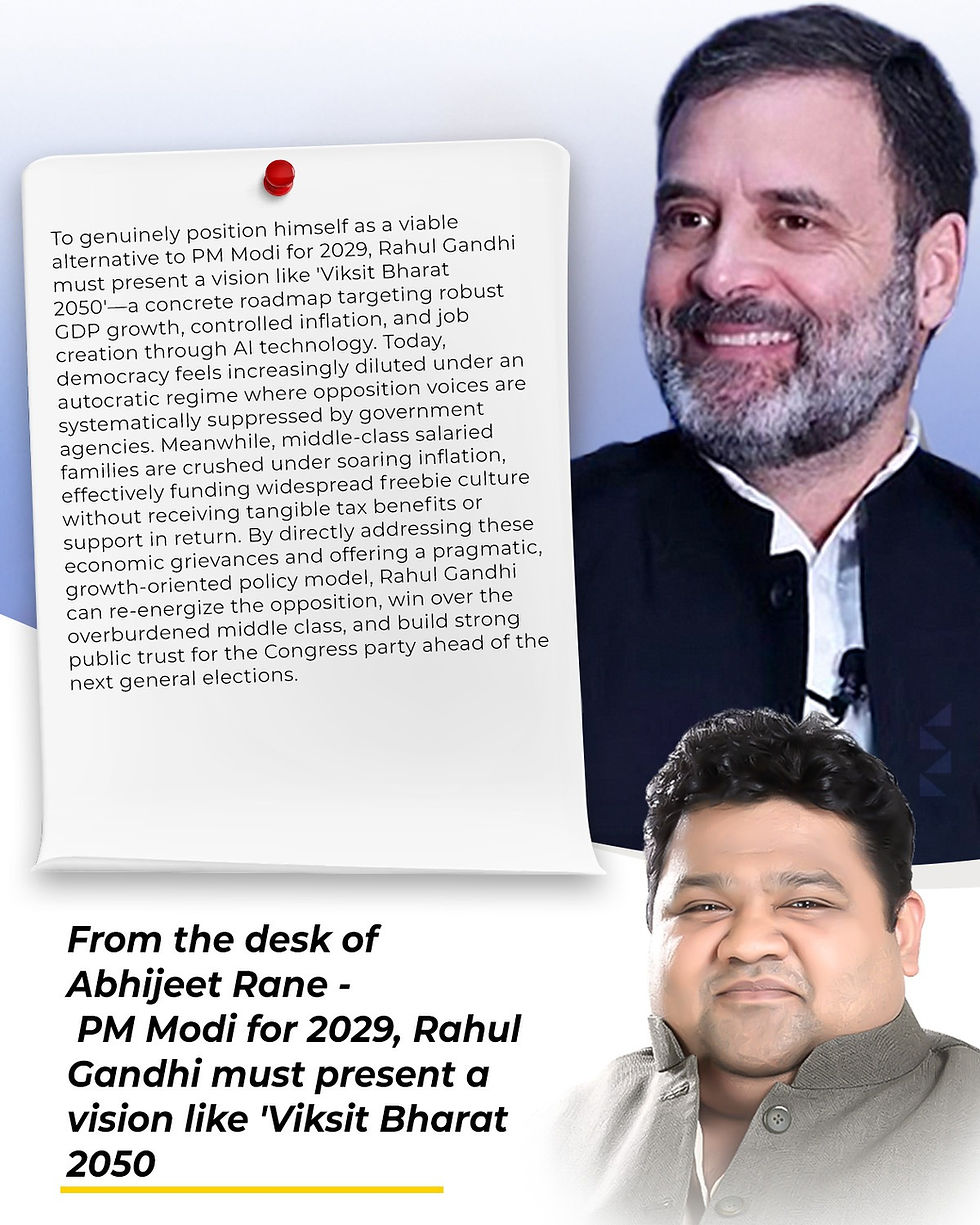
To genuinely position himself as a viable alternative to PM Modi for 2029, Rahul Gandhi must present a vision like 'Viksit Bharat 2050'—a concrete roadmap targeting robust GDP growth, controlled inflation, and job creation through AI technology. Today, democracy feels increasingly diluted under an autocratic regime where opposition voices are systematically suppressed by government agencies. Meanwhile, middle-class salaried families are crushed under soaring inflation, effectively funding widespread freebie culture without receiving tangible tax benefits or support in return. By directly addressing these economic grievances and offering a pragmatic, growth-oriented policy model, Rahul Gandhi can re-energize the opposition, win over the overburdened middle class, and build strong public trust for the Congress party ahead of the next general elections.
🔽



Comments