


Shahjahan Sheikh’s rise in Sandeshkhali ...
🖋️ *From The Desk of Abhijeet Rane*
Shahjahan Sheikh’s rise in Sandeshkhali is a chilling example of how the TMC “syndicate” operates. A migrant from Bangladesh, he began as a laborer but soon built unions, grabbed land, and turned into a local strongman. By 2012 he switched to TMC, gaining political cover and expanding his empire—fish farms, land deals, extortion, and terror over SC/ST families. Locals allege he and his men seized women and property with impunity, while police looked away. His wealth ballooned into hundreds of crores, far beyond his origins. The ED’s probe into a ₹10,000 crore ration scam finally exposed him, leading to his arrest in February 2024 after mass protests. Yet witness intimidation and delayed action revealed how deep the syndicate runs. Sandeshkhali shows organized crime fused with politics, crushing the weakest.
🔽
🖋️ *From The Desk of Abhijeet Rane*
The fall of TMC in Bengal has unleashed pent up anger among ordinary people long oppressed by syndicate rule, extortion, and violence. As offices are attacked and symbols torn down, many carrying BJP flags are not trained cadres but locals venting decades of frustration. BJP’s cadre based structure does not encourage violence, but victims of injustice see the saffron flag as a symbol of resistance and victory. Congress supporters too have reclaimed offices once seized by TMC. With Mamata’s era collapsing, defections will rise, power centers will shift, and welfare schemes like Ayushman Bharat will reach citizens. Festivals will regain freedom, and slogans like “Jai Shri Ram” will no longer be taboo. Bengal is entering a new phase where suppressed voices reclaim dignity, and the state’s lost reputation begins to return.
🔽
🖋️ *From The Desk of Abhijeet Rane*
Before 2014, Indian politics followed an unwritten rule: powerful leaders and their children faced only dummy opponents, ensuring their seats in Parliament or Assemblies. This nepotistic culture guaranteed dynastic dominance. But Modi, Shah, and state leaders like Fadnavis, Yogi, Sharma, and Suvendu Adhikari broke that pattern. They fielded strong candidates against entrenched families, challenging the old “shared spoils” system. Examples include BJP defeating figures like Kejriwal, Mamata Banerjee, Gaurav Gogoi, Dhiraj Deshmukh, Sushil Shinde, Prithviraj Chavan, and Vishwajit Kadam. By refusing to compromise, BJP dismantled the cozy arrangement of political elites. What was once a culture of collusion—“let’s all eat together”—was replaced with genuine competition. This marked a decisive end to dynastic privilege and reshaped India’s electoral landscape.
🔽
🖋️ *From The Desk of Abhijeet Rane*
Sangram Patil’s reckless behavior on social media proved costly. His habit of crossing limits, cheered by followers, eventually dragged his family into court battles. Parents in Jalgaon had to plead for bail and guarantee his presence from England whenever summoned. Months of mental stress, financial loss, and business damage followed. One careless post turned into endless hearings and expenses. Despite warnings, some supporters still normalize his excesses, but the real burden fell on his parents as guarantors. His stubborn ego has harmed both himself and his family. Once abroad, arrogance deepened, and now he resists criticism, worsening his situation. Sangram’s story is a reminder: unchecked bravado online can destroy reputations, drain resources, and leave loved ones to pay the price.
🔽
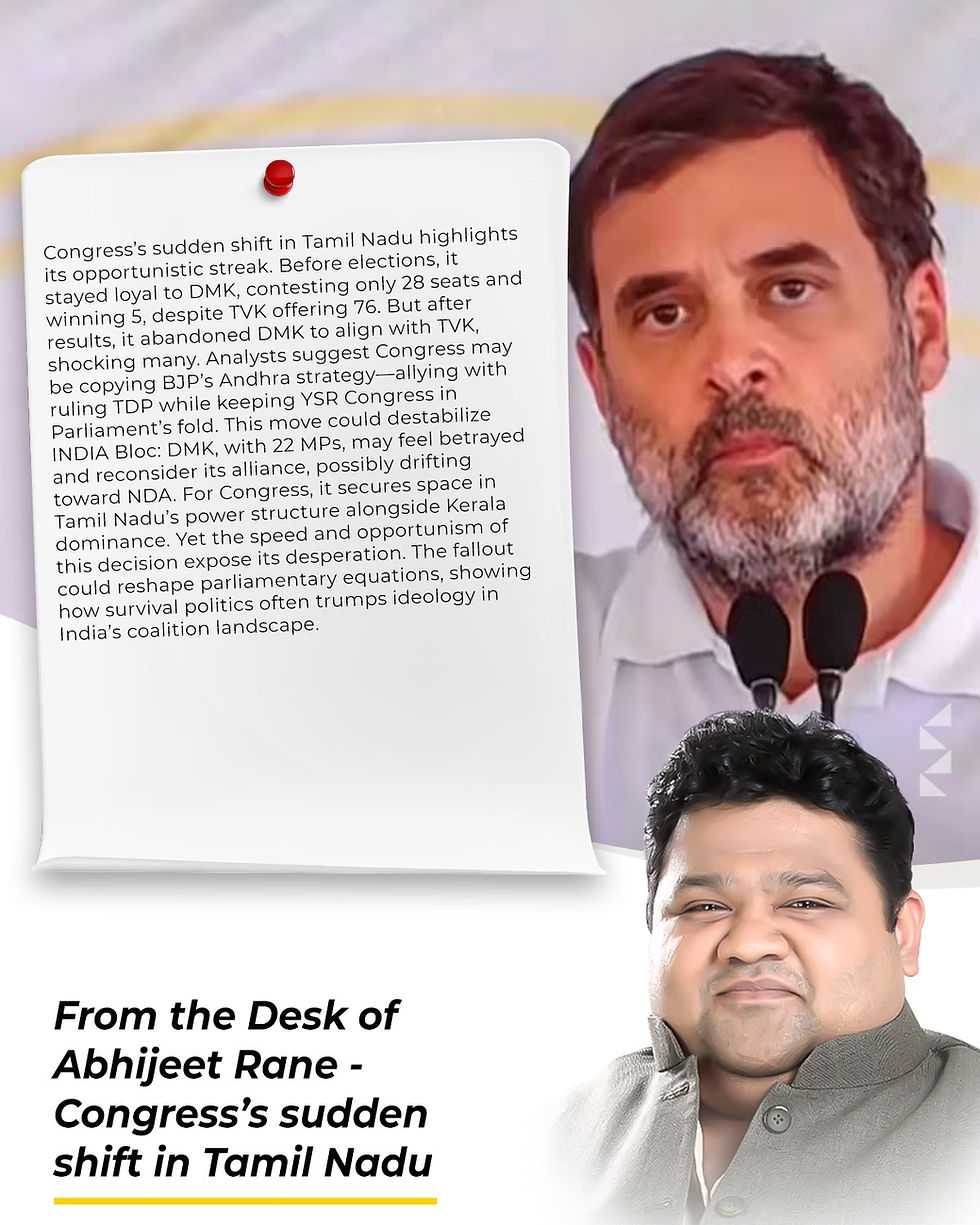
🖋️ *From The Desk of Abhijeet Rane*
Congress’s sudden shift in Tamil Nadu highlights its opportunistic streak. Before elections, it stayed loyal to DMK, contesting only 28 seats and winning 5, despite TVK offering 76. But after results, it abandoned DMK to align with TVK, shocking many. Analysts suggest Congress may be copying BJP’s Andhra strategy—allying with ruling TDP while keeping YSR Congress in Parliament’s fold. This move could destabilize INDIA Bloc: DMK, with 22 MPs, may feel betrayed and reconsider its alliance, possibly drifting toward NDA. For Congress, it secures space in Tamil Nadu’s power structure alongside Kerala dominance. Yet the speed and opportunism of this decision expose its desperation. The fallout could reshape parliamentary equations, showing how survival politics often trumps ideology in India’s coalition landscape.
🔽
#MamataBanerjee #Modi #AmitShah #Sandeshkhali #ShahjahanSheikh #IndianPolitics #BJP #TMC #Congress #WestBengal #TamilNaduPolitics #CorruptionExposed #GroundReality #GovernanceNarrative #Controversy #FreedomOfExpression




Comments