


🖋️ From The Desk of Abhijeet Rane
🖋️ From The Desk of Abhijeet Rane
India Steps Boldly Into the Quantum Future
With the launch of the National Quantum Mission, India has signaled that it intends not just to participate in the next technological revolution, but to shape it. Quantum technology—where information exists in multiple states simultaneously—promises computing power far beyond anything classical machines can achieve. By investing in quantum computing, secure quantum communication, advanced sensors, and indigenous quantum networks, India is entering a domain dominated so far by the US, China, and Europe. The mission’s impact will be far‑reaching: stronger encryption, breakthroughs in medical research, sharper climate forecasting, more precise space exploration, and a new generation of AI capabilities. Most importantly, it marks a shift in India’s technological identity—from a consumer of global innovation to a creator of frontier science. The quantum race has begun, and India is finally on the starting line with intent and ambition.
🔽
🖋️ From The Desk of Abhijeet Rane,
A War That Redrew the Geopolitical Chessboard
The Ukraine conflict has become far more than a regional war; it has exposed the deeper contest for influence across Eurasia. Many analysts argue that the confrontation served to curb Russia’s resurgence while quietly pulling Moscow into China’s financial orbit. Sanctions, frozen assets, and exclusion from global systems pushed Russia toward alternative partnerships, even as Beijing expanded its lending footprint. India’s strategic choices—continuing energy trade with Russia in non‑dollar currencies and strengthening ties in Central Asia—signaled an independent path amid global pressure. The shifting alignments in Afghanistan, Iran, and the Caucasus further illustrate how regional powers are recalibrating. What emerges is a complex chessboard where influence, not ideology, drives decisions. The Ukraine war may end on the battlefield, but its geopolitical aftershocks will shape Asia’s balance of power for years.
🔽
🖋️ From The Desk of Abhijeet Rane
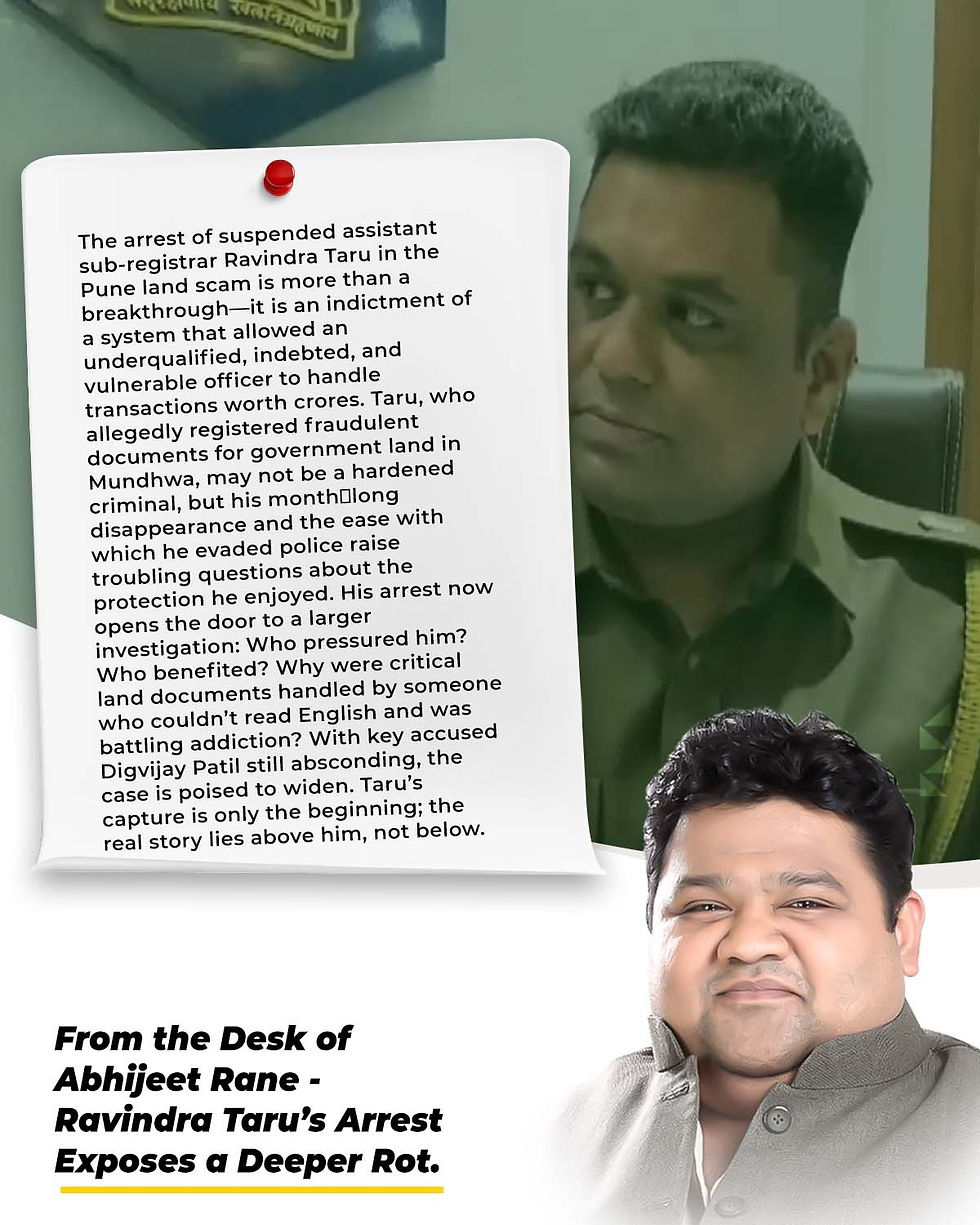
Ravindra Taru’s Arrest Exposes a Deeper Rot
The arrest of suspended assistant sub-registrar Ravindra Taru in the Pune land scam is more than a breakthrough—it is an indictment of a system that allowed an underqualified, indebted, and vulnerable officer to handle transactions worth crores. Taru, who allegedly registered fraudulent documents for government land in Mundhwa, may not be a hardened criminal, but his month‑long disappearance and the ease with which he evaded police raise troubling questions about the protection he enjoyed. His arrest now opens the door to a larger investigation: Who pressured him? Who benefited? Why were critical land documents handled by someone who couldn’t read English and was battling addiction? With key accused Digvijay Patil still absconding, the case is poised to widen. Taru’s capture is only the beginning; the real story lies above him, not below.
🔽
🖋️ From The Desk of Abhijeet Rane
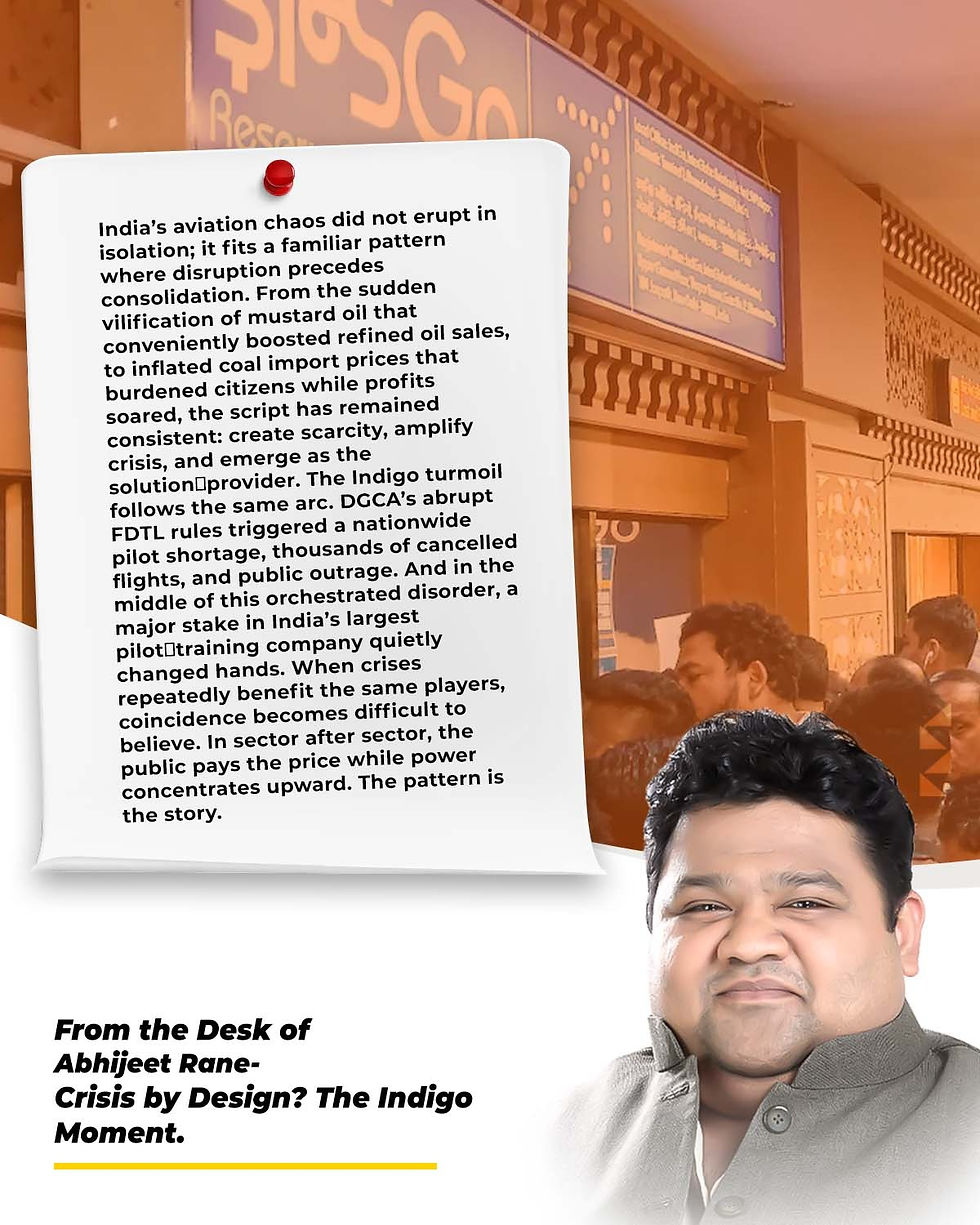
Crisis by Design? The Indigo Moment
India’s aviation chaos did not erupt in isolation; it fits a familiar pattern where disruption precedes consolidation. From the sudden vilification of mustard oil that conveniently boosted refined oil sales, to inflated coal import prices that burdened citizens while profits soared, the script has remained consistent: create scarcity, amplify crisis, and emerge as the solution‑provider. The Indigo turmoil follows the same arc. DGCA’s abrupt FDTL rules triggered a nationwide pilot shortage, thousands of cancelled flights, and public outrage. And in the middle of this orchestrated disorder, a major stake in India’s largest pilot‑training company quietly changed hands. When crises repeatedly benefit the same players, coincidence becomes difficult to believe. In sector after sector, the public pays the price while power concentrates upward. The pattern is the story.
🔽
🖋️ From The Desk of Abhijeet Rane
The Cost of Miscalculation in Ukraine
Ukraine’s tragedy is a reminder of how leadership driven by fear, impulse, and geopolitical fantasies can devastate a nation. In the pursuit of NATO membership—a goal never guaranteed—President Zelensky pushed his country into a confrontation it was never equipped to win. The result is catastrophic: vast territories lost, cities reduced to rubble, millions displaced, and an unbearable human toll. The West offered applause, not protection; promises, not partnership. And now, after unimaginable sacrifice, even the United States signals that NATO membership is off the table. This raises a deeper question about leadership rooted in symbolism rather than strategy. Nations are not defended by theatrics or moral posturing but by prudence, foresight, and an understanding of history. Ukraine’s collapse stands as a stark warning of what happens when leaders mistake bravado for statecraft.
🔽
#QuantumIndia #TechFuture #GeoPolitics #EurasiaShift #LandScam #SystemFailure #AviationCrisis #IndigoChaos #UkraineWar #GlobalChessboard #AbhijeetRane #Zelensky #Putin #RavindraTaru #DigvijayPatil #IndigoCrisis #SystemFailure



Comments